Handmade vs Factory Made Jian Zhan: What Is the Difference?
Quick Answer: What Makes Handmade Jian Zhan Different?
Handmade Jian Zhan differs from factory-made tea bowls because each piece is shaped, glazed, and fired through a traditional ceramic process where artisan skill and kiln transformation determine the final result. Factory-made bowls focus on consistency and efficiency, while handmade jian zhan emphasizes individuality, craftsmanship, and natural beauty.
The difference is not simply:
"Handmade is better than factory-made."
The real difference is:
Handmade Jian Zhan carries the character of the artisan and the kiln, while factory production focuses on producing identical results at scale.
Understanding this difference helps tea lovers choose a bowl that matches their appreciation and expectations.
What Is Handmade Jian Zhan?
Handmade Jian Zhan refers to tea bowls created using traditional ceramic techniques associated with Jian ware.
The process usually involves:
-
Preparing ceramic clay
-
Shaping the bowl
-
Applying tenmoku glaze
-
High-temperature firing
-
Selecting successful results
Every stage requires experience.
The artisan does not simply manufacture a product.
They create the conditions for a unique ceramic piece to emerge.
What Is Factory-Made Jian Zhan?
Factory-made Jian Zhan usually refers to bowls produced through more standardized industrial methods.
The goals are:
-
Higher production volume
-
Lower cost
-
Consistent appearance
-
Faster manufacturing
Modern production technology can create attractive ceramic products.
However, the process is designed around efficiency rather than individual artistic expression.
The Difference Begins With the Clay
Handmade Jian Zhan
Traditional jian ware is closely connected with its material foundation.
Artisans consider:
-
Clay composition
-
Iron content
-
Texture
-
Firing behavior
The clay influences:
-
Weight
-
Surface quality
-
Relationship with glaze
Factory Production
Industrial ceramics often prioritize:
-
Easy processing
-
Stable results
-
Large-scale production
The material may be selected mainly for manufacturing efficiency.
Difference 1: Shaping and Forming
The shape of a tea bowl affects:
-
Balance
-
Drinking comfort
-
Visual harmony
Handmade Process
A handmade jian zhan bowl may involve:
-
Individual shaping
-
Artisan adjustment
-
Hand finishing
Small variations naturally appear.
These variations create individuality.
Factory Process
Factory production usually uses:
-
Molds
-
Standardized shaping
-
Automated procedures
The advantage:
Every bowl looks nearly identical.
The limitation:
Individual character is reduced.
Difference 2: Glaze Application
The tenmoku glaze is one of the most important parts of Jian Zhan.
Handmade Glazing
An artisan carefully considers:
-
Glaze thickness
-
Coverage
-
Bowl shape
-
Expected firing behavior
Because every bowl is different, the final result can vary.
Factory Glazing
Factory methods often focus on:
-
Repeatability
-
Faster production
-
Uniform appearance
This creates consistency but may reduce natural variation.
Difference 3: The Kiln Creates the Final Result
One of the most important ideas in Jian Zhan is:
The artisan prepares the bowl, but the kiln creates the final artwork.
During firing:
-
Minerals move
-
Crystals develop
-
Colors appear
-
Patterns form
Even experienced artisans cannot completely control every detail.
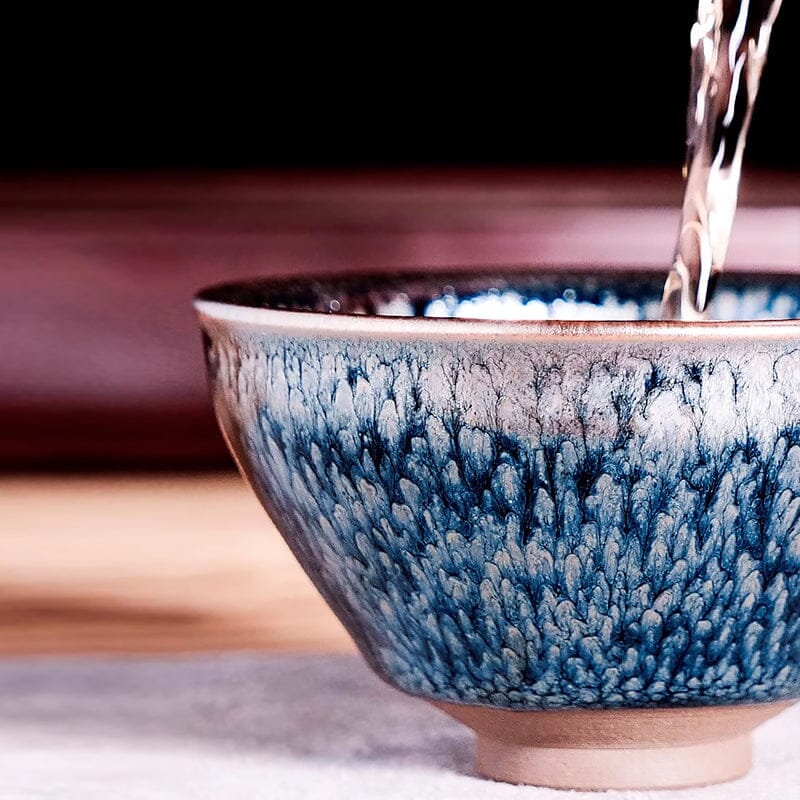
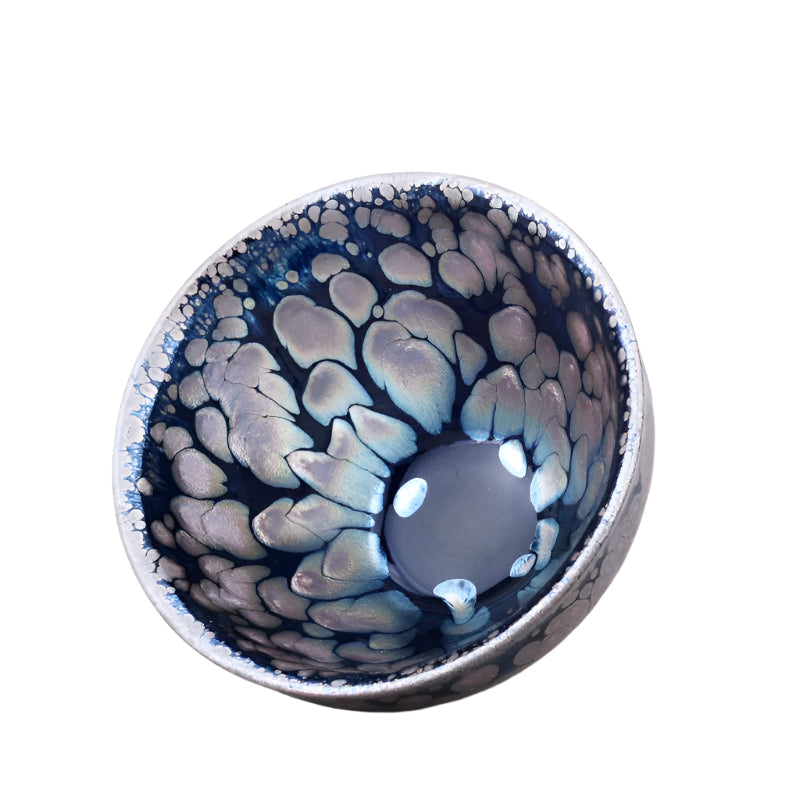
Why Handmade Jian Zhan Has Unique Patterns
A genuine handmade jian zhan often shows:
-
Slight glaze differences
-
Natural pattern variation
-
Individual firing characteristics
For example:
Two hare’s fur bowls may both belong to the same style, but their streak patterns will not be identical.
Two oil spot bowls may have different crystal distribution.
This uniqueness is part of the attraction.
Handmade Jian Zhan vs Factory-Made: Comparison Table
| Feature | Handmade Jian Zhan | Factory-Made Bowl |
|---|---|---|
| Production | Artisan-based | Standardized production |
| Shape | Individual variation | Consistent shape |
| Glaze | Natural variation | More uniform appearance |
| Firing result | Unique kiln effects | Predictable results |
| Quantity | Limited | Large production |
| Character | Individual | Repeated design |
| Value | Craft and artistry | Function and affordability |
Why Handmade Jian Zhan Costs More
Many people ask:
"Why should I pay more for a handmade tea bowl?"
The answer comes from the process.
A handmade bowl includes:
Time
Each piece requires individual attention.
Skill
The artisan develops knowledge through years of practice.
Risk
High-temperature firing can produce unexpected results.
Some bowls may not achieve the desired glaze effect.
Uniqueness
The final piece cannot be exactly reproduced.
Does Handmade Always Mean Better?
Not automatically.
A handmade bowl still depends on:
-
Artisan experience
-
Material quality
-
Firing success
-
Design balance
A poorly executed handmade bowl may not compare favorably with a well-made ceramic product.
The important question is:
How much knowledge, skill, and care went into creating the piece?
How to Identify Authentic Jian Zhan
For buyers, several signs can help.
1. Understand the Production Story
A trustworthy seller should explain:
-
Materials
-
Making process
-
Glaze characteristics
-
Firing method
2. Look for Natural Variation
Authentic handmade Jian Zhan should not appear completely identical.
Small differences are expected.
3. Examine the Glaze
Natural tenmoku glaze usually has:
-
Depth
-
Movement
-
Layered appearance
4. Consider Craftsmanship Details
Look at:
-
Rim finishing
-
Foot design
-
Overall balance
Why Handmade Jian Zhan Matters in Modern Tea Culture
Today, many objects are produced for convenience.
Handmade ceramics offer something different:
-
Connection with tradition
-
Appreciation of human skill
-
A slower relationship with everyday objects
A handmade Jian Zhan transforms tea drinking from a simple action into a mindful experience.
Handmade Jian Zhan and the Value of Imperfection
Traditional East Asian aesthetics often appreciate natural variation.
A handmade bowl may have:
-
Slight asymmetry
-
Unique glaze movement
-
Individual marks from the process
These are not necessarily defects.
They represent:
-
Human involvement
-
Natural transformation
-
Authentic craftsmanship
Is Handmade Jian Zhan Worth Buying?
For tea lovers who value:
-
History
-
Craftsmanship
-
Unique objects
-
Traditional ceramic art
handmade Jian Zhan offers a meaningful experience.
It is not simply a cup.
It is a connection between:
-
Artisan
-
Clay
-
Fire
-
Tea culture
Frequently Asked Questions About Handmade Jian Zhan
Is all Jian Zhan handmade?
Traditional Jian Zhan is handmade, although modern production methods vary.
Why is handmade Jian Zhan more expensive?
Because it requires more labor, skill, firing knowledge, and produces unique results.
Are factory-made tea bowls bad?
Not necessarily. They can be functional and affordable, but they offer a different experience.
How can I know if Jian Zhan is authentic?
Look for information about materials, craftsmanship, glaze, and production methods.
Does handmade Jian Zhan improve tea taste?
Many tea enthusiasts appreciate the experience, texture, and traditional connection, although taste perception is personal.
Final Thoughts: Choosing Between Handmade and Factory Jian Zhan
The difference between handmade and factory-made Jian Zhan is ultimately a difference in philosophy.
Factory production values:
-
Efficiency
-
Consistency
-
Accessibility
Handmade Jian Zhan values:
-
Craftsmanship
-
Individuality
-
Tradition
For those who appreciate the story behind an object, a handmade Jian Zhan bowl offers something beyond function.
Every bowl represents a moment where human skill meets the unpredictable beauty of fire.
That is what makes authentic Jian Zhan timeless.