Jian Zhan Price Guide — What Determines the Value of a Handmade Tea Bowl?
Chapter 13: Jian Zhan Price Guide — What Determines the Value of a Handmade Tea Bowl?
Quick Answer: Why Are Tenmoku Jian Zhan Bowls Expensive?
Tenmoku Jian Zhan prices vary because each handmade bowl reflects the quality of its materials, craftsmanship, glaze development, firing success, and artistic value. Unlike mass-produced cups, a handmade Jian Zhan is the result of a complex ceramic process where many variables determine the final outcome.
The price of a Jian Zhan bowl is not simply based on size or appearance.
Its value comes from the combination of:
-
Traditional craftsmanship
-
Rare materials
-
Difficult firing process
-
Unique tenmoku glaze effects
-
Artisan experience
-
Historical and cultural significance
Understanding these factors helps buyers appreciate why different Jian Zhan bowls can have dramatically different prices.
Understanding Jian Zhan Tenmoku Value: More Than a Tea Cup
For people unfamiliar with handmade ceramics, the price difference between ordinary tea cups and Jian Zhan may seem surprising.
A factory-produced cup can be made quickly with predictable results.
A traditional Jian Zhan requires:
-
Special clay preparation
-
Skilled shaping
-
Carefully formulated glaze
-
High-temperature firing
-
Selection after kiln opening
The final bowl represents not only a functional object but also a piece of ceramic craftsmanship.
Factor 1: Craftsmanship and Handmade Quality
The first major factor affecting jian zhan price is craftsmanship.
A handmade bowl contains the knowledge and experience of the artisan.
Important craftsmanship factors include:
Shape Accuracy
The bowl should have:
-
Balanced proportions
-
Smooth curves
-
Comfortable handling
-
Traditional character
A beautiful glaze cannot compensate for poor form.
Wall Thickness
Experienced artisans understand how to balance:
-
Strength
-
Weight
-
Heat retention
-
Drinking comfort
Creating this balance requires years of practice.
Foot Finishing
The foot of the bowl shows important craftsmanship details.
A well-finished foot demonstrates:
-
Careful trimming
-
Attention to detail
-
Understanding of traditional forms
Factor 2: Quality of Clay
Traditional Jian Zhan uses iron-rich clay.
The clay influences:
-
Body texture
-
Weight
-
Glaze interaction
-
Final appearance
Higher-quality clay preparation requires:
-
Careful selection
-
Proper processing
-
Experience with material behavior
Because the clay participates in the firing process, it directly affects the final bowl.
Factor 3: Tenmoku Glaze Complexity
The glaze is often the most important visual factor.
A jianzhan tenmoku bowl is valued not only for color but for the complexity of its glaze development.
During firing:
-
Minerals move
-
Crystals form
-
Patterns appear naturally
The artisan cannot completely control the final result.
This uncertainty contributes to the value of successful pieces.
Factor 4: Rarity of Glaze Effects
Different glaze styles have different levels of difficulty and rarity.
Hare’s Fur Jian Zhan Tenmoku Ware
Hare’s Fur is one of the classic Jian Zhan styles.
Value depends on:
-
Line clarity
-
Pattern flow
-
Density
-
Overall harmony
A refined Hare’s Fur bowl demonstrates excellent control of glaze and firing.
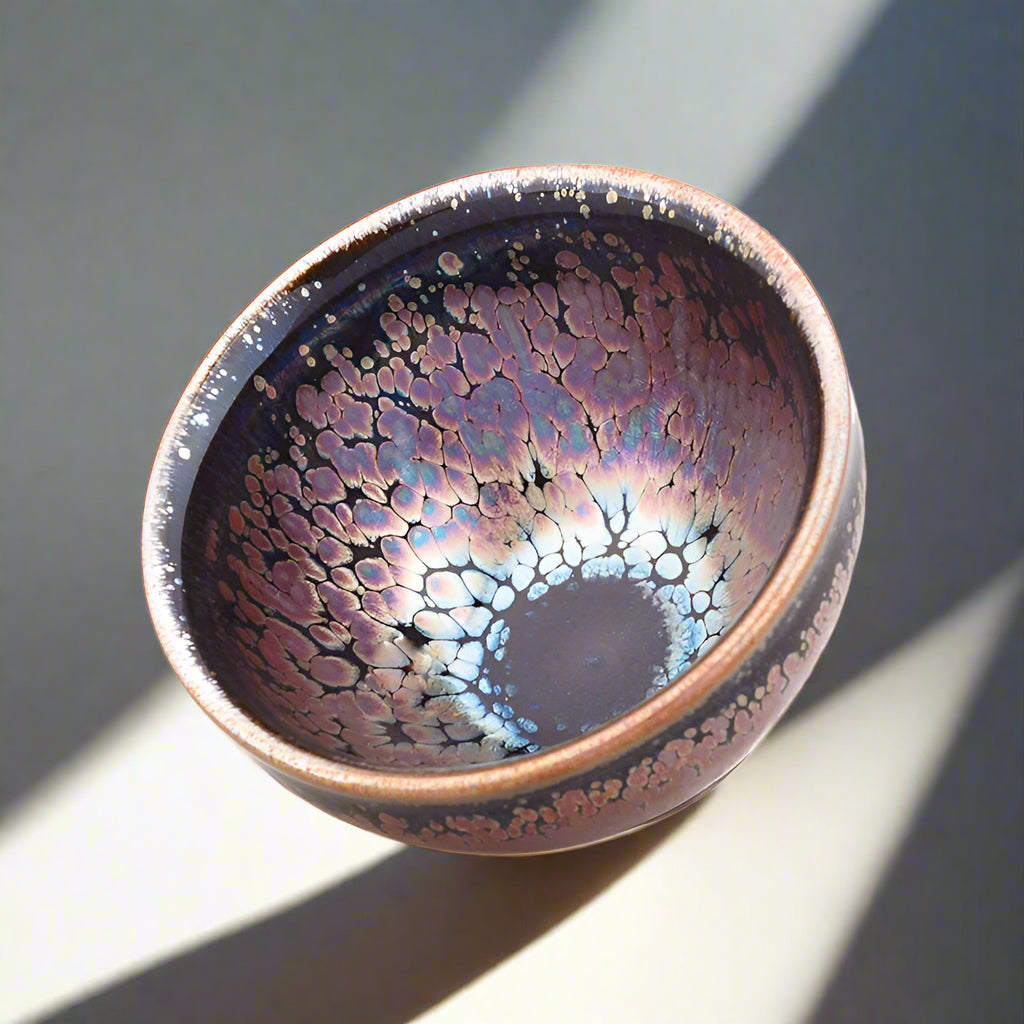
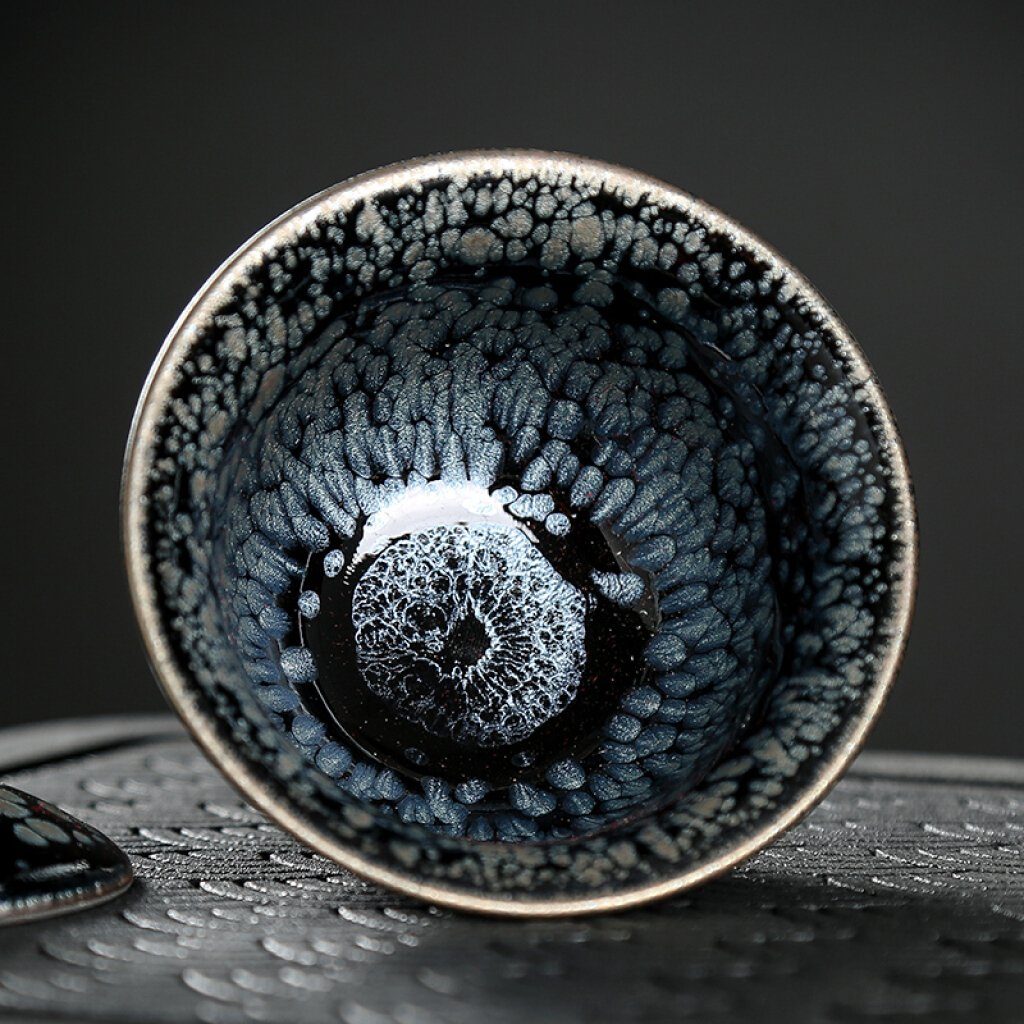
Oil Spot Jian Zhan Tenmoku Ware
Oil Spot is highly appreciated because of its crystal development.
Important characteristics include:
-
Crystal size
-
Metallic reflection
-
Distribution
-
Depth
Exceptional examples may show complex reflective effects.
Yohen Jian Zhan Tenmoku Ware
Yohen represents one of the rarest and most admired glaze transformations.
Its value comes from:
-
Unpredictable formation
-
Unique color effects
-
Difficult firing conditions
Because artisans cannot simply guarantee a Yohen result, successful examples are highly valued.
Factor 5: Kiln Firing Difficulty
High-temperature firing is one of the biggest challenges in Jian Zhan production.
During firing, many things can affect the outcome:
-
Temperature changes
-
Kiln atmosphere
-
Bowl position
-
Cooling process
Possible results include:
-
Beautiful glaze development
-
Unexpected patterns
-
Unsuitable surfaces
-
Structural problems
A successful bowl represents the result of both preparation and risk.
Factor 6: Artisan Reputation and Experience
Like many traditional arts, the maker influences value.
An experienced Jian Zhan artisan develops:
-
Better material understanding
-
More consistent techniques
-
Stronger artistic style
Collectors often appreciate knowing:
-
Who created the piece
-
What techniques were used
-
How the bowl was fired
The story behind the bowl becomes part of its value.
Factor 7: Individuality and Uniqueness
One of the greatest differences between handmade Jian Zhan and factory products is uniqueness.
A handmade bowl may have:
-
A special crystal pattern
-
Unique color reflection
-
Distinctive glaze movement
There may never be another identical piece.
For collectors, this individuality is part of the attraction.
Understanding Different Jian Zhan Price Levels
Although prices vary widely, buyers often encounter several general categories.
Entry-Level Handmade Jian Zhan
Suitable for:
-
Beginners
-
Daily tea use
-
First-time collectors
Characteristics:
-
Good craftsmanship
-
Attractive glaze
-
Practical design
These bowls provide an introduction to authentic Jian Zhan appreciation.
Mid-Range Jian Zhan
Often selected by:
-
Experienced tea drinkers
-
Growing collectors
Characteristics:
-
More refined craftsmanship
-
Better glaze development
-
Stronger artistic expression
Premium Jian Zhan
Premium pieces usually demonstrate:
-
Exceptional glaze effects
-
Advanced craftsmanship
-
Rare firing results
-
Strong artistic identity
These bowls are often appreciated as ceramic artworks.
Why Cheap Jian Zhan Can Be Misleading
A very low price does not always mean a good opportunity.
Extremely inexpensive products may involve:
-
Different clay materials
-
Industrial production
-
Artificial decoration
-
Simplified firing processes
A lower price may reflect a different production method rather than a better deal.
How to Evaluate Whether a Jian Zhan Is Worth the Price
Before purchasing, consider:
1. Material Transparency
Does the seller explain:
-
Clay
-
Glaze
-
Firing method?
2. Craftsmanship Quality
Look at:
-
Shape
-
Foot
-
Surface finishing
3. Glaze Development
Ask:
-
Is the pattern natural?
-
Does it have depth?
-
Does it change under light?
4. Seller Information
Trustworthy sellers provide:
-
Detailed descriptions
-
Clear photographs
-
Product dimensions
-
Care information
Is Expensive Jian Zhan Always Better?
Not necessarily.
The highest-priced bowl may not be the best choice for every person.
A good Jian Zhan should match:
-
Personal taste
-
Tea habits
-
Budget
-
Appreciation style
A simple but harmonious bowl may bring more enjoyment than a rare piece that is rarely used.
Buying Jian Zhan as an Investment vs Buying for Enjoyment
Some collectors purchase Jian Zhan because of artistic appreciation.
Others simply want a beautiful bowl for daily tea.
Both approaches are valid.
However, Jian Zhan is primarily a craft tradition.
Its greatest value comes from:
-
Being used
-
Being appreciated
-
Becoming part of tea moments
A bowl sitting unused cannot provide the experience it was created for.
Why Jian Zhan Continues to Gain Global Appreciation
Modern tea culture has introduced Jian Zhan to enthusiasts worldwide.
Its appeal comes from:
-
Ancient history
-
Handmade quality
-
Unique aesthetics
-
Connection with mindfulness
As more people discover traditional ceramics, Jian Zhan continues to represent a meaningful alternative to disposable modern products.
Key Takeaways
-
Jian Zhan prices are determined by craftsmanship, materials, glaze quality, firing difficulty, and uniqueness.
-
Handmade production creates natural variation and individual character.
-
Rare tenmoku effects such as Oil Spot and Yohen often increase value.
-
Price should be evaluated together with authenticity and craftsmanship.
-
The best Jian Zhan is the one that matches your personal appreciation and tea practice.
Frequently Asked Questions About Jian Zhan Price
How much does a Jian Zhan bowl cost?
Prices vary widely depending on craftsmanship, glaze quality, artisan reputation, and rarity.
Why is Jian Zhan more expensive than normal tea cups?
Because it involves handmade production, specialized materials, and complex high-temperature firing.
Is expensive Jian Zhan always higher quality?
Not always. Overall harmony and craftsmanship matter more than price alone.
Which Jian Zhan glaze is most valuable?
Rare Yohen effects and exceptional Oil Spot examples are often highly appreciated.
Is Jian Zhan worth buying?
For tea lovers who value handmade ceramics and cultural history, Jian Zhan offers a unique experience beyond ordinary tableware.