What Is Hare’s Fur Jian Zhan? The Complete Guide to Rabbit Fur Tenmoku Glaze
Quick Answer: What Is Hare’s Fur Jian Zhan?
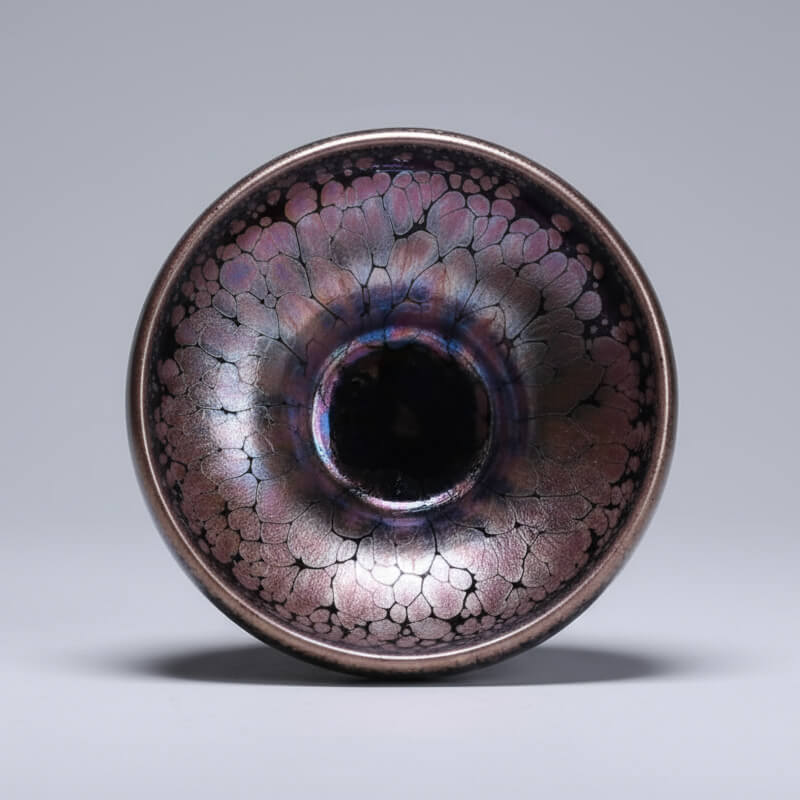
Hare’s Fur Jian Zhan is one of the most iconic styles of Jian Zhan Tenmoku, recognized by its fine, elongated streak patterns flowing through a dark glaze surface. These natural streaks are created by iron-rich glaze movement during high-temperature firing, producing a visual effect that resembles the soft texture of rabbit or hare fur.
Unlike painted decoration, the patterns of a genuine hare’s fur tenmoku glaze are formed naturally inside the kiln.
Each bowl develops its own unique pattern through the interaction of:
-
Iron-rich clay
-
Mineral glaze
-
High-temperature firing
-
Kiln atmosphere
This combination makes every Hare’s Fur Jian Zhan an individual work of ceramic art.
Understanding Hare’s Fur Jian Zhan
Among all Jian Zhan glaze styles, Hare’s Fur is one of the most historically important and widely recognized.
The name comes from the appearance of the glaze.
When viewed closely, the fine streaks resemble:
-
The soft lines of hare fur
-
Flowing strands of silk
-
Fine mineral patterns within the glaze
In Chinese ceramic tradition, this style is known as:
兔毫盏 (Tu Hao Zhan)
meaning:
"Rabbit Fur Tea Bowl."
During the Song Dynasty, this glaze style became highly admired because it combined technical achievement with elegant natural beauty.
The Historical Background of Hare’s Fur Tenmoku
A Symbol of Song Dynasty Tea Culture
During the Song Dynasty (960–1279), tea culture reached an extraordinary level of refinement.
Tea was not simply a beverage.
It became an important part of:
-
Court culture
-
Scholar gatherings
-
Artistic appreciation
-
Social interaction
The preparation method known as dian cha (点茶) required powdered tea to be whisked into a thick foam.
Dark Jian Zhan bowls became especially valued because their deep glaze created a dramatic contrast with the white tea foam.
Among these bowls, Hare’s Fur Jian Zhan was one of the most admired forms.
Why Song Dynasty Tea Masters Loved Hare’s Fur Bowls
The popularity of Hare’s Fur Jian Zhan was not only based on appearance.
It also served practical purposes.
1. Strong Contrast With Tea Foam
The dark background allowed tea masters to observe:
-
Foam thickness
-
Texture
-
Stability
-
Color
This was important during Song Dynasty tea competitions.
2. Elegant Natural Beauty
Song aesthetics emphasized:
-
Simplicity
-
Balance
-
Natural expression
The flowing streaks of Hare’s Fur reflected these ideals.
The pattern was neither completely controlled nor completely random.
It represented harmony between artisan skill and nature.
How Is Hare’s Fur Tenmoku Created?
The creation of hare fur tenmoku is a complex ceramic process.
It requires careful control of:
-
Clay preparation
-
Glaze formulation
-
Application technique
-
Kiln temperature
-
Firing atmosphere
Step 1: Iron-Rich Jian Clay
Traditional Jian Zhan begins with special clay containing a high amount of iron minerals.
This clay contributes to:
-
Dark body color
-
Dense structure
-
Interaction with glaze during firing
The clay is not only the foundation of the bowl.
It actively participates in the final appearance.
Step 2: Applying the Tenmoku Glaze
The glaze used for Hare’s Fur Jian Zhan contains high levels of iron oxide.
During firing, these minerals undergo complex transformations.
The glaze becomes:
-
Dark
-
Glossy
-
Deeply layered
The streak patterns develop through mineral separation and movement.
Step 3: High-Temperature Firing
The bowl is fired at extremely high temperatures.
During this process:
-
The glaze melts
-
Iron minerals migrate
-
Crystals begin forming
-
Patterns appear
The artisan can influence the process, but cannot fully predict the final result.
This uncertainty is one of the reasons Jian Zhan is so fascinating.
The Science Behind the Hare’s Fur Pattern
The beauty of Hare’s Fur comes from controlled natural chemistry.
During firing:
Iron-rich glaze materials separate and form directional patterns.
These patterns appear as:
-
Thin streaks
-
Flowing lines
-
Metallic reflections
The final result depends on many variables:
-
Temperature curve
-
Cooling speed
-
Kiln environment
-
Glaze thickness
Even experienced artisans cannot create two perfectly identical bowls.
Characteristics of High-Quality Hare’s Fur Jian Zhan
Not every bowl with streaks represents excellent craftsmanship.
Collectors often evaluate several characteristics.
1. Clear and Natural Streak Formation
A high-quality hare fur tenmoku glaze usually shows:
-
Defined streaks
-
Natural flow
-
Consistent movement
The lines should feel alive rather than mechanical.
2. Depth Within the Glaze
The best examples have visual depth.
The pattern appears to exist beneath the surface rather than sitting on top.
When the bowl moves under light, the streaks may reveal different reflections.
3. Balanced Distribution
A beautiful bowl usually has harmony between:
-
Dark glaze areas
-
Streak density
-
Bowl shape
Too much pattern can become visually overwhelming.
Too little may appear flat.
4. Smooth Surface Quality
The glaze should feel:
-
Dense
-
Smooth
-
Well fused
The beauty of Hare’s Fur is not only visual.
The physical experience matters too.
Hare’s Fur Jian Zhan vs Other Tenmoku Glazes
Jian Zhan has many famous glaze styles.
Understanding the differences helps buyers appreciate each type.
Hare’s Fur vs Oil Spot Jian Zhan
Hare’s Fur:
-
Linear streak patterns
-
Flowing movement
-
Traditional Song Dynasty appearance
Oil Spot:
-
Round crystal formations
-
Metallic reflections
-
More "star-like" appearance
Both are important Jian Zhan traditions.
Hare’s Fur vs Yohen Tenmoku
Hare’s Fur:
-
More historically common
-
Recognized by flowing lines
-
Elegant and restrained
Yohen:
-
Extremely rare
-
Known for colorful transformation
-
Highly valued by collectors
Hare’s Fur represents classic elegance, while Yohen represents exceptional rarity.
Why Hare’s Fur Jian Zhan Remains Popular Today
Modern tea lovers appreciate Hare’s Fur for several reasons.
Connection With History
Using a Hare’s Fur bowl connects today’s tea practice with Song Dynasty culture.
Natural Beauty
No two bowls are identical.
Each one carries its own kiln story.
Versatility
Hare’s Fur Jian Zhan works beautifully with:
-
Oolong tea
-
Black tea
-
Pu-erh tea
-
Matcha
Timeless Aesthetic
The flowing patterns remain attractive across different styles of tea culture.
How to Choose a Hare’s Fur Jian Zhan Bowl
When selecting a bowl, consider:
Bowl Shape
Choose a form that matches your tea habits.
Popular options include:
-
Conical shape
-
Open mouth shape
-
Flared rim shape
Size
Common sizes:
80–100 ml
Suitable for tasting and collectors.
100–150 ml
A versatile everyday choice.
150 ml+
Suitable for larger tea sessions.
Personal Preference
The "best" bowl is not always the rarest.
Choose one that creates a personal connection.
Is Hare’s Fur Jian Zhan Worth Buying?
For many tea lovers, the answer is yes.
Its value comes from the combination of:
-
Historical importance
-
Handmade craftsmanship
-
Natural glaze development
-
Daily usability
A Hare’s Fur bowl is not only something to display.
It is designed to be used and appreciated.
Caring for Hare’s Fur Tenmoku
Because Hare’s Fur Jian Zhan has a high-fired glaze surface, care is relatively simple.
Recommended:
-
Wash with warm water
-
Use gentle cleaning methods
-
Avoid harsh abrasives
-
Dry completely after use
With proper care, a quality Jian Zhan can accompany tea practice for many years.
Frequently Asked Questions About Hare’s Fur Jian Zhan
Why is it called Hare’s Fur Jian Zhan?
Because the fine streak patterns resemble the soft flowing texture of hare fur.
Is Hare’s Fur Jian Zhan handmade?
Traditional Jian Zhan is handmade, including shaping, glazing, and kiln firing.
Are all Hare’s Fur bowls valuable?
Value depends on craftsmanship, glaze quality, firing results, and overall harmony.
What tea is best for Hare’s Fur Jian Zhan?
It pairs well with oolong, black tea, pu-erh, and many other traditional teas.
Is Hare’s Fur the oldest Jian Zhan glaze style?
It is one of the most historically significant and recognized Jian Zhan glaze styles.
Final Thoughts: The Timeless Beauty of Hare’s Fur Jian Zhan
Hare’s Fur Jian Zhan represents the essence of traditional ceramic philosophy:
Human hands prepare the materials.
The kiln completes the transformation.
Nature creates the final expression.
For more than a thousand years, this elegant tenmoku glaze has continued to inspire tea lovers and ceramic enthusiasts.
Its beauty does not come from perfect repetition.
It comes from uniqueness.
Every Hare’s Fur Jian Zhan tells its own story—created by clay, fire, craftsmanship, and time.