Oil Spot Jian Zhan Explained: The Beauty of Tenmoku Crystal Glaze
Quick Answer: What Is Oil Spot Jian Zhan?
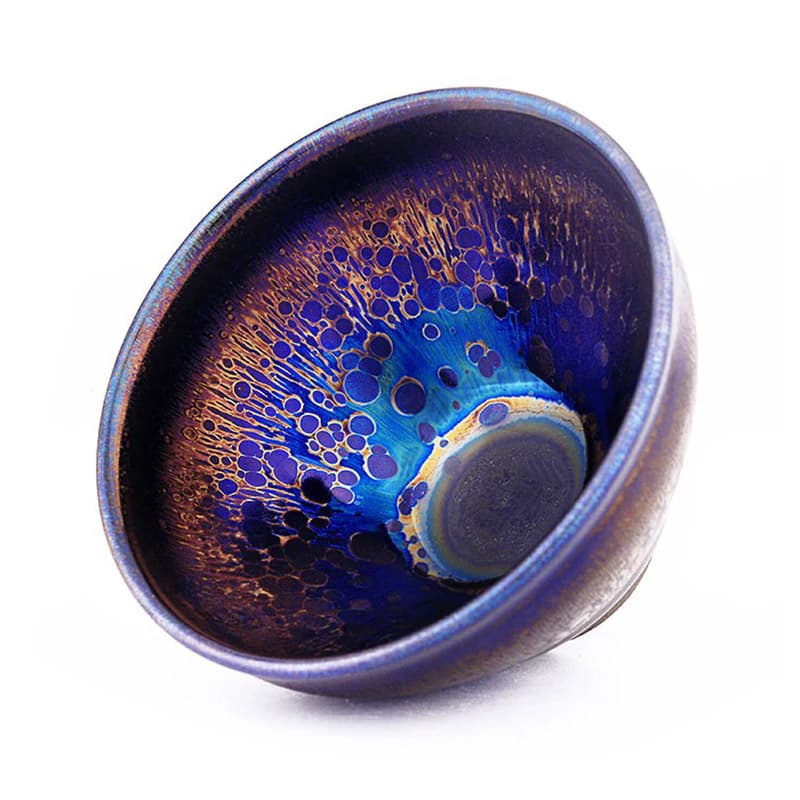
Oil Spot Jian Zhan is a highly admired style of Jian Zhan Tenmoku recognized for its round metallic crystal formations that appear like floating oil droplets across a dark glaze surface. These natural patterns are created through complex mineral reactions during high-temperature firing, making every oil spot tenmoku bowl unique.
Unlike painted decoration, the "oil spots" are not added after production.
They are formed inside the kiln through the interaction between:
-
Iron-rich glaze
-
Mineral composition
-
Firing temperature
-
Cooling process
-
Kiln atmosphere
This combination creates one of the most visually fascinating expressions of traditional Jian Zhan craftsmanship.
Understanding Oil Spot Tenmoku
Among all Jian Zhan glaze styles, Oil Spot is considered one of the most technically challenging and visually distinctive.
In Chinese ceramic terminology, Oil Spot is known as:
油滴盏 (You Di Zhan)
meaning:
"Oil Droplet Tea Bowl."
The name describes the appearance of the glaze:
Small reflective spots appear across the dark surface, resembling:
-
Drops of oil floating on water
-
Stars in a night sky
-
Metallic crystals under light
This natural pattern has made oil spot jian zhan especially popular among collectors and tea enthusiasts.
The Historical Background of Oil Spot Jian Zhan
A Masterpiece of Song Dynasty Ceramic Innovation
During the Song Dynasty, Jian ware reached its peak.
The period was known for:
-
Refined aesthetics
-
Advanced ceramic technology
-
Appreciation of natural beauty
Tea culture strongly influenced ceramic development.
Because powdered tea was prepared through whisking, tea masters valued bowls that enhanced the visual experience.
Dark Jian Zhan bowls provided the perfect background for:
-
White tea foam
-
Tea texture
-
Surface contrast
Oil Spot Jian Zhan represented one of the highest achievements of this tradition.
Why Oil Spot Jian Zhan Was Highly Valued
The beauty of oil spot tenmoku came from its balance between:
-
Human technique
-
Natural transformation
The artisan controlled:
-
Clay preparation
-
Glaze formula
-
Bowl shape
-
Firing conditions
But the final crystal pattern depended on the kiln.
This relationship between control and unpredictability became central to Jian Zhan aesthetics.
The Science Behind Oil Spot Tenmoku
The unique appearance of oil spot jian zhan comes from mineral crystallization.
During high-temperature firing:
-
The iron-rich glaze melts.
-
Mineral components separate.
-
Iron oxide moves through the glaze.
-
Crystals form during cooling.
-
Reflective spots appear on the surface.
The artisan cannot simply paint or copy this effect.
The kiln creates the final expression.
Why Oil Spot Patterns Look Metallic
One of the most attractive characteristics of oil spot tenmoku is its reflective quality.
Under different lighting conditions, the crystals may appear:
-
Silver
-
Gold
-
Blue
-
Bronze
-
Metallic gray
This changing appearance gives the bowl a dynamic visual character.
A single bowl may look completely different:
-
Under sunlight
-
Under warm indoor lighting
-
During a tea ceremony
The Factors That Influence Oil Spot Formation
Creating successful oil spot jian zhan requires controlling many variables.
1. Glaze Composition
The glaze formula determines:
-
Crystal development
-
Spot size
-
Reflection quality
Small changes in mineral ratios can significantly affect the result.
2. Firing Temperature
Temperature is critical.
Too low:
-
Crystals may not develop properly.
Too high:
-
Patterns may disappear or become unstable.
The firing process requires experience and precision.
3. Cooling Process
Crystal formation continues during cooling.
The cooling speed influences:
-
Crystal shape
-
Distribution
-
Reflection
4. Kiln Atmosphere
The environment inside the kiln affects chemical reactions.
Factors include:
-
Oxygen levels
-
Heat distribution
-
Position inside the kiln
This is why two bowls fired together can still have different results.
Characteristics of High-Quality Oil Spot Jian Zhan
Not every bowl with spots represents exceptional quality.
Collectors usually evaluate several characteristics.
1. Crystal Clarity
High-quality oil spot tenmoku often shows:
-
Clearly defined crystals
-
Strong reflective effects
-
Visible depth
The spots should appear naturally integrated into the glaze.
2. Balanced Distribution
A beautiful oil spot bowl usually has harmony between:
-
Crystal density
-
Dark background
-
Bowl shape
The pattern should feel balanced rather than crowded.
3. Three-Dimensional Appearance
Premium examples often create a sense of depth.
The crystals appear to exist within multiple layers of glaze.
When the bowl moves, the surface seems to change.
4. Natural Variation
Authentic oil spot jian zhan should not look identical to industrial decoration.
Natural differences are part of the appeal.
Oil Spot Jian Zhan vs Hare’s Fur Jian Zhan
Both are classic tenmoku glaze styles, but their visual language is different.
Hare’s Fur Jian Zhan
Characteristics:
-
Long flowing streaks
-
Linear movement
-
Elegant traditional appearance
Feeling:
Calm, refined, and classical.
Oil Spot Jian Zhan
Characteristics:
-
Circular crystal patterns
-
Metallic reflection
-
Star-like appearance
Feeling:
Dynamic, dramatic, and collectible.
Oil Spot Jian Zhan vs Yohen Tenmoku
These two are often compared because both are highly valued.
Oil Spot
Known for:
-
Crystal spots
-
Metallic beauty
-
More recognizable patterns
Yohen Tenmoku
Known for:
-
Rare color transformation
-
Unpredictable effects
-
Exceptional scarcity
Oil Spot represents controlled complexity.
Yohen represents extraordinary kiln transformation.
Why Collectors Appreciate Oil Spot Jian Zhan
Collectors are attracted to oil spot tenmoku because it combines:
Technical Difficulty
Creating stable crystal patterns requires advanced knowledge.
Artistic Beauty
Each bowl has a unique surface.
Historical Connection
The style continues a ceramic tradition developed centuries ago.
Functional Purpose
Unlike decorative ceramics, Jian Zhan remains a usable tea bowl.
Choosing an Oil Spot Jian Zhan Bowl
When selecting an oil spot tea bowl, consider:
Crystal Size
Some prefer:
Fine Crystals
More delicate and subtle.
Larger Crystals
More dramatic and reflective.
Reflection Style
Look for how the bowl changes under light.
A good oil spot glaze should have visual movement.
Bowl Form
The shape affects the overall experience.
Popular forms include:
-
Wide opening bowls
-
Conical bowls
-
Classic Jian ware shapes
Personal Preference
The most valuable bowl is not always the most expensive.
The best choice is the one that creates a personal connection.
Oil Spot Jian Zhan for Modern Tea Practice
Today, oil spot jian zhan is enjoyed by:
-
Tea enthusiasts
-
Ceramic collectors
-
Artists
-
Cultural enthusiasts
It works beautifully with:
Oolong Tea
The reflective glaze complements the color and aroma experience.
Black Tea
The dark tea liquor creates a harmonious visual combination.
Pu-erh Tea
The traditional atmosphere matches aged tea appreciation.
Matcha
The metallic glaze creates contrast with vibrant green matcha foam.
How to Care for Oil Spot Tenmoku
Oil spot Jian Zhan is durable when properly cared for.
Recommended:
-
Rinse after use
-
Avoid harsh chemicals
-
Use soft cleaning methods
-
Allow the bowl to dry fully
The glaze is designed for tea use and can become a long-term companion.
Is Oil Spot Jian Zhan Worth Buying?
For those who appreciate handmade ceramics, oil spot jian zhan offers a unique combination of:
-
Artistic beauty
-
Traditional history
-
Technical achievement
-
Daily usability
Its value comes not only from appearance.
It comes from understanding the difficult process behind creating it.
Frequently Asked Questions About Oil Spot Jian Zhan
Why is it called Oil Spot Jian Zhan?
Because the crystal patterns resemble small oil droplets floating on a dark surface.
Is oil spot tenmoku rare?
High-quality examples are valued because crystal formation is difficult to achieve consistently.
Are oil spots painted onto the bowl?
No. Authentic oil spot patterns are created naturally during firing.
What tea is best for oil spot Jian Zhan?
It works well with oolong, black tea, pu-erh, and matcha.
Is oil spot Jian Zhan more valuable than Hare’s Fur?
Not always. Value depends on craftsmanship, glaze quality, rarity, and personal preference.
Final Thoughts: The Living Beauty of Oil Spot Jian Zhan
Oil Spot Jian Zhan represents one of the most fascinating achievements in traditional ceramic art.
Its beauty comes from a unique partnership:
The artisan prepares the materials.
The kiln transforms them.
Nature creates the final pattern.
Every oil spot tenmoku bowl carries a different story written through minerals, fire, and time.
For tea lovers and collectors, owning an Oil Spot Jian Zhan means experiencing a piece of ceramic history that continues to evolve with every use.