What Is Jian Zhan Tenmoku?
Chapter 2: What Is Jian Zhan Tenmoku?
Quick Answer: What Is Jian Zhan Tenmoku?
Jian Zhan Tenmoku is a traditional Chinese high-fired tea bowl originally created in Jianyang, Fujian Province during the Song Dynasty (960–1279). It is famous for its iron-rich clay, dark glaze, and naturally formed patterns created through complex mineral reactions inside the kiln.
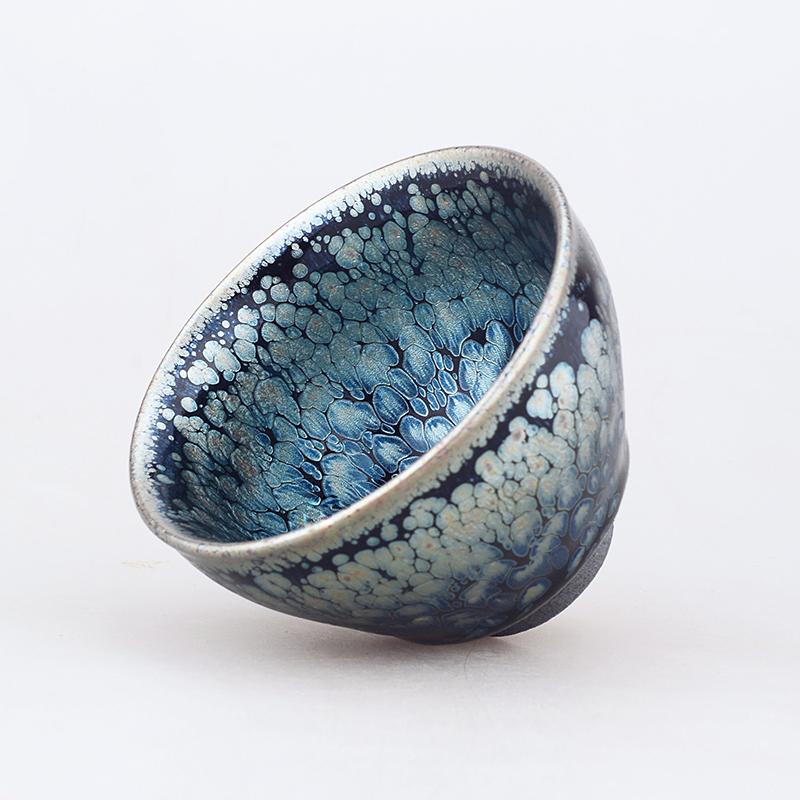
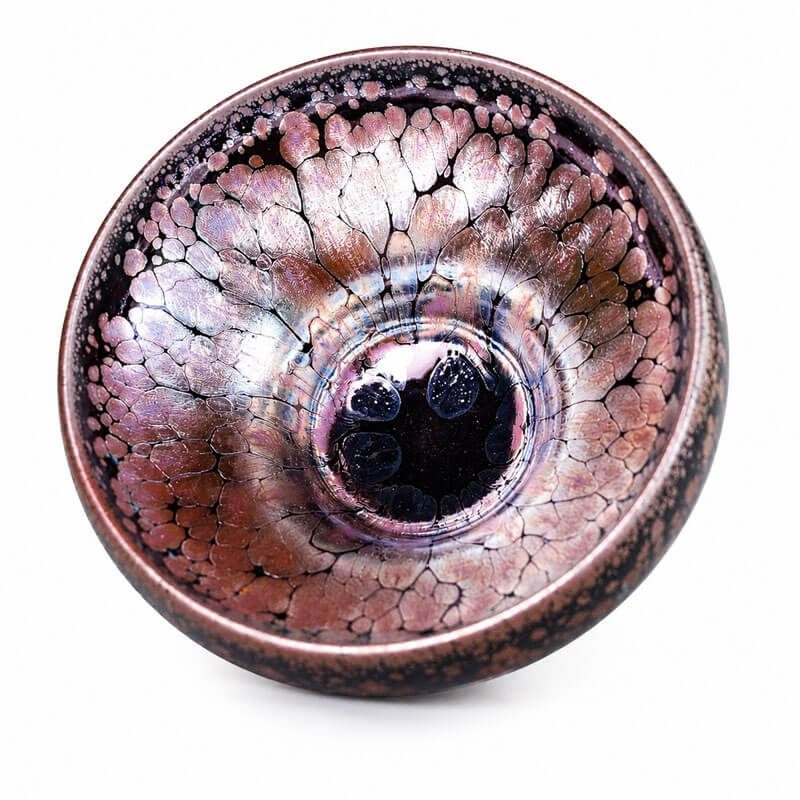
Unlike ordinary ceramic cups with painted decorations, authentic Jian Zhan develops its unique surface patterns during firing. Effects such as Hare’s Fur (兔毫), Oil Spot (油滴), and Yohen (曜变) are created when iron-rich glaze components crystallize at extremely high temperatures, making every Jian Zhan bowl naturally unique.
Today, Jian Zhan is considered one of the most important forms of traditional Chinese tea ware and is highly valued by tea practitioners, ceramic collectors, and lovers of handmade craftsmanship worldwide.
Understanding the Meaning of Jian Zhan
The name Jian Zhan (建盏) contains important historical information.
The word “Jian” (建) refers to the ancient Jianzhou region, a historical area located in present-day northern Fujian Province, China. During the Song Dynasty, this region became famous for producing exceptional black-glazed tea bowls.
The word “Zhan” (盏) means a small tea bowl or cup used for drinking tea.
Together, Jian Zhan literally means “tea bowls from Jian.”
These bowls were not created simply as everyday drinking vessels. During the Song Dynasty, tea culture reached an extraordinary level of sophistication, and Jian Zhan became the preferred tea bowl for the fashionable practice of whisked tea (dian cha, 点茶).
What Makes Jian Zhan Different From Ordinary Tea Cups?
At first glance, Jian Zhan may appear simple. Most traditional Jian Zhan bowls have:
-
A dark black or deep brown glaze
-
A relatively simple bowl shape
-
A handmade appearance
-
Natural patterns rather than painted decoration
However, the simplicity hides an extremely complex manufacturing process.
The uniqueness of Jian Zhan comes from four essential elements:
1. Iron-Rich Clay
The clay used for Jian Zhan contains a high amount of iron oxide compared with many other ceramic clays.
This iron-rich body creates several important characteristics:
-
A dark stone-like appearance
-
Strong interaction with the glaze
-
Unique firing behavior
-
A heavier and more substantial feeling in the hand
The relationship between the clay and glaze is fundamental. Jian Zhan is not simply a bowl covered with black glaze—the entire body participates in the final artistic result.
2. Iron-Rich Glaze
The famous dark surface of Jian Zhan comes from a special glaze containing a high percentage of iron compounds.
During firing, the glaze undergoes dramatic chemical changes:
-
Iron minerals move through the molten glaze.
-
Different temperatures affect crystal growth.
-
The kiln atmosphere influences oxidation and reduction reactions.
-
Cooling conditions determine the final pattern.
This process creates the characteristic visual effects that make Jian Zhan famous.
3. High-Temperature Kiln Firing
Authentic Jian Zhan requires extremely high firing temperatures, often around 1,300°C or higher.
At these temperatures:
-
The glaze becomes liquid.
-
Minerals separate and reorganize.
-
Iron crystals form beneath the surface.
-
Natural patterns emerge.
The artisan controls the preparation and firing environment, but the final result always contains an element of surprise.
This balance between human skill and natural transformation is one of the most fascinating aspects of Jian Zhan.
4. Natural Kiln Effects
The patterns found on Jian Zhan are not painted by hand.
They are created through natural kiln reactions.
Some famous examples include:
Hare’s Fur Tenmoku
Hare’s Fur Jian Zhan features thin, flowing streaks that resemble the soft texture of rabbit or hare fur.
These lines form when iron-rich glaze flows downward during firing, creating elongated crystal patterns.
It is one of the most recognizable traditional Jian Zhan styles.
Oil Spot Tenmoku
Oil Spot Jian Zhan displays small circular metallic crystals across the glaze surface.
The patterns resemble tiny droplets of oil floating on water, which explains the name.
High-quality oil spot bowls often show:
-
Strong contrast
-
Even crystal distribution
-
Metallic reflections
-
Deep visual layers
Yohen Tenmoku
Yohen means “kiln transformation” or “unexpected change.”
This style is famous for its rare and dramatic color variations, including:
-
Blue
-
Purple
-
Silver
-
Gold
-
Rainbow-like reflections
Yohen Jian Zhan represents the ultimate expression of unpredictability in kiln-fired ceramics.
Is Jian Zhan the Same as Tenmoku?
A common question among tea enthusiasts is:
Are Jian Zhan and Tenmoku the same thing?
The answer is related but not exactly identical.
Jian Zhan is the original Chinese name for these tea bowls, while Tenmoku is the Japanese term used to describe this style of tea bowl.
The connection began during the Song Dynasty when Japanese Buddhist monks traveled to China to study Buddhism and culture. They encountered Chinese tea practices and brought Jian Zhan bowls back to Japan.
The Japanese pronunciation of Tianmu Mountain (天目山), an important Buddhist mountain where monks studied, became Tenmoku.
Over time, the word Tenmoku became widely used in Japan and internationally to describe dark-glazed tea bowls inspired by this tradition.
Therefore:
-
All traditional Jian Zhan belongs to the Tenmoku family.
-
Not every Tenmoku-style bowl is authentic Jian Zhan.
-
Jian Zhan specifically refers to bowls made according to the traditional Jianyang ceramic heritage.
Jian Zhan and the Song Dynasty Tea Revolution
To understand Jian Zhan, it is necessary to understand Song Dynasty tea culture.
During the Song Dynasty, tea was not only a beverage—it was an art form.
Tea competitions became popular among scholars, aristocrats, and even emperors. Participants prepared powdered tea, whisked it with hot water, and judged the quality by observing:
-
The whiteness of the tea foam
-
The thickness of the foam
-
The durability of the foam
-
The contrast between tea and bowl
The dark surface of Jian Zhan created the perfect background for observing the white tea foam.
This practical advantage helped Jian Zhan become the preferred tea bowl of the Song elite.
The famous Song emperor and tea enthusiast Emperor Huizong of Song even praised Jian Zhan in his tea writings, reflecting its prestigious position in imperial tea culture.
Why Do Tea Lovers Still Choose Jian Zhan Today?
Although modern tea preparation methods have changed, Jian Zhan remains popular because it offers a unique combination of function and beauty.
Heat Retention
The thick ceramic body helps maintain tea temperature, making it suitable for slow tea appreciation.
Visual Experience
The dark glaze highlights the color of tea liquor, especially lighter-colored teas.
Handmade Character
Each bowl carries evidence of the artisan’s work and the kiln’s transformation.
Emotional Connection
Many tea lovers appreciate Jian Zhan because it represents patience, simplicity, and harmony with nature.
A machine-produced cup may be perfectly identical to another. A handmade Jian Zhan is valuable precisely because it cannot be perfectly duplicated.
Common Misconceptions About Jian Zhan
“All black tea bowls are Jian Zhan.”
Not true.
Many modern black-glazed cups are inspired by Tenmoku aesthetics but are not traditional Jian Zhan.
Authentic Jian Zhan requires specific historical, material, and craftsmanship characteristics.
“The patterns are painted onto the cup.”
Not true.
Traditional Jian Zhan patterns are created inside the glaze through kiln reactions.
“A more colorful bowl is always better.”
Not necessarily.
Quality depends on many factors:
-
Clay quality
-
Glaze development
-
Crystal formation
-
Balance of pattern
-
Overall craftsmanship
A simple but well-made Jian Zhan can be more valuable than a visually dramatic but poorly crafted piece.
Key Takeaways
-
Jian Zhan Tenmoku is a traditional Chinese tea bowl originating from Jianyang, Fujian Province.
-
It reached its peak during the Song Dynasty because of the popularity of whisked tea.
-
Jian Zhan is defined by iron-rich clay, iron-rich glaze, and high-temperature kiln firing.
-
Its famous patterns, including Hare’s Fur, Oil Spot, and Yohen, are naturally created during firing.
-
Jian Zhan and Tenmoku are closely related, but Jian Zhan specifically refers to the Chinese origin and traditional production method.
-
Every authentic handmade Jian Zhan is unique because the kiln plays an essential role in creating the final appearance.