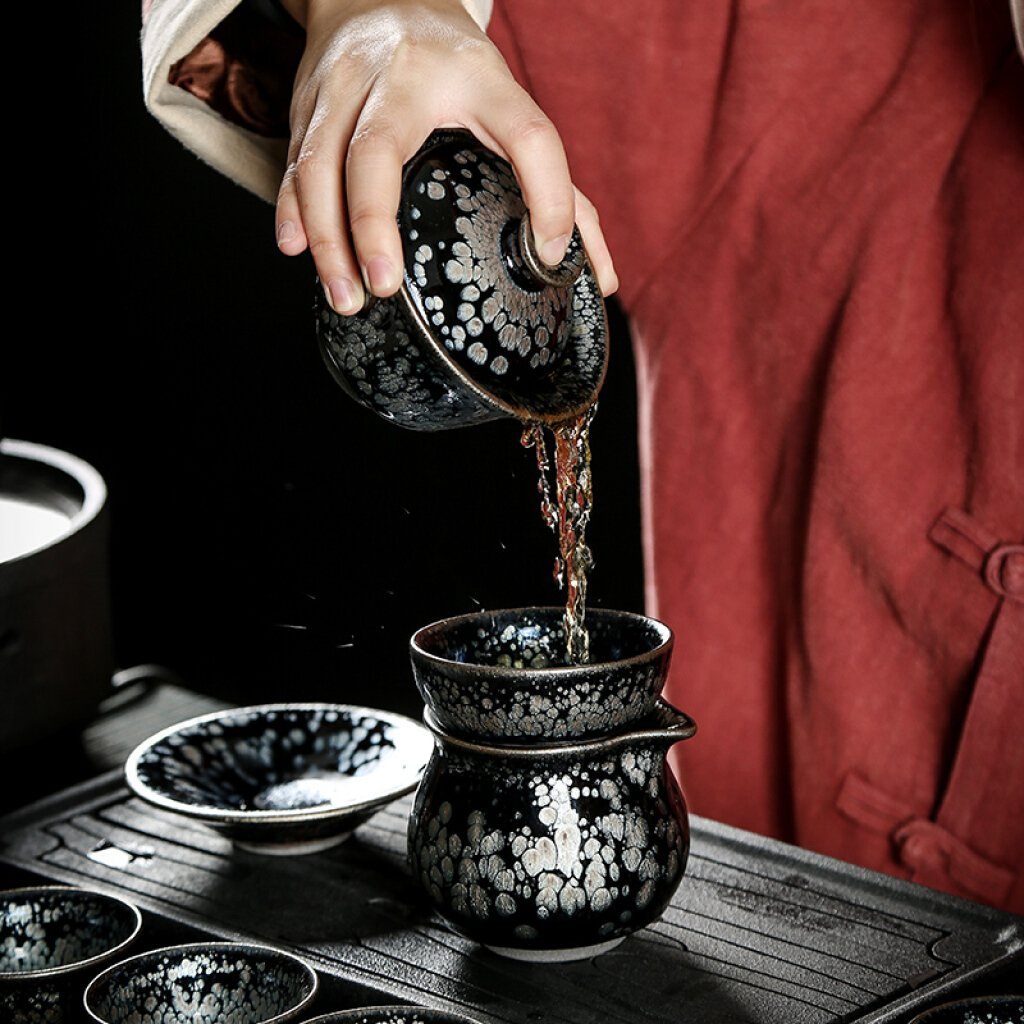
The History of Jian Zhan — From Song Dynasty Imperial Tea Culture to Modern Revival
Chapter 3: The History of Jian Zhan — From Song Dynasty Imperial Tea Culture to Modern Revival
Quick Answer: What Is the History of Jian Zhan?
Jian Zhan has a history of more than 1,000 years, originating in Jianyang, Fujian Province during the Song Dynasty (960–1279). It became the preferred tea bowl for imperial and scholarly tea culture because its dark iron-rich glaze created the ideal contrast for observing powdered tea foam during Song Dynasty tea competitions.
After the decline of Song-style whisked tea culture, Jian Zhan production gradually disappeared. However, traditional techniques were revived in modern times, and today Jian Zhan has become one of the most respected examples of Chinese ceramic craftsmanship, appreciated by tea lovers and collectors worldwide.
The Birth of Jian Zhan in Ancient Jianyang
The story of Jian Zhan begins in the mountains of northern Fujian Province, an area historically known as Jianzhou.
This region provided the essential natural resources required for producing Jian Zhan:
-
Iron-rich clay deposits
-
Abundant forests for kiln fuel
-
Suitable mountain landscapes for kiln construction
-
Skilled ceramic craftsmen with generations of experience
Among the many ceramic centers that flourished in ancient China, Jianyang became famous for producing a unique type of black-glazed tea bowl known as Jian Zhan.
The earliest examples appeared during the late Tang Dynasty and Five Dynasties period, but Jian Zhan reached its artistic and cultural peak during the Song Dynasty.
The Golden Age of Jian Zhan: The Song Dynasty
The Song Dynasty was one of the most culturally sophisticated periods in Chinese history.
During this era, China experienced remarkable development in:
-
Literature
-
Painting
-
Philosophy
-
Calligraphy
-
Ceramic arts
-
Tea culture
Tea was not simply consumed as a daily beverage. Among scholars and elites, tea became a refined artistic activity involving preparation techniques, aesthetic appreciation, and intellectual discussion.
This cultural environment created the perfect conditions for Jian Zhan to flourish.
Jian Zhan and the Rise of Song Dynasty Tea Culture
During the Song Dynasty, the most prestigious tea style was dian cha (点茶), or whisked tea.
Unlike modern loose-leaf tea preparation, Song tea involved:
-
Grinding tea leaves into fine powder.
-
Placing the powder into a tea bowl.
-
Adding hot water.
-
Whisking the tea into a thick foam.
The quality of the tea was judged through competitions known as tea contests (斗茶, dou cha).
Participants compared:
-
Foam color
-
Foam thickness
-
Foam stability
-
Water marks
-
Overall appearance
Because the tea foam was bright white, a dark-colored tea bowl provided the strongest visual contrast.
This made Jian Zhan especially desirable.
The deep black glaze transformed the white tea foam into a dramatic visual display, allowing tea masters to better evaluate their preparation skills.
Jian Zhan in Imperial Tea Culture
Jian Zhan became closely associated with the highest levels of Song Dynasty tea culture.
The imperial court valued refined tea preparation, and tea appreciation became an important part of elite life.
The Song emperor Emperor Huizong of Song was particularly famous for his passion for tea. In his tea treatise, he described the importance of suitable tea ware and the aesthetic qualities valued by tea practitioners of the time.
Although Jian Zhan was used by many levels of society, its association with elite tea culture greatly increased its reputation.
A Jian Zhan bowl represented more than a drinking vessel—it represented knowledge, refinement, and appreciation of craftsmanship.
The Development of Jian Kiln (Jian Yao)
The main production center of Jian Zhan was the famous Jian Kiln, known in Chinese as Jian Yao (建窑).
Located in Jianyang, Fujian, Jian Kiln became one of the most important ceramic kilns during the Song Dynasty.
Archaeological discoveries have revealed large kiln complexes producing thousands of Jian Zhan bowls.
The scale of production demonstrates how important these bowls became during the peak of Song tea culture.
However, despite the large production volume, each bowl remained unique because the glaze patterns were created through natural kiln reactions.
Why Jian Zhan Became Famous in Japan
The history of Jian Zhan extends beyond China.
During the Song Dynasty, Japanese Buddhist monks traveled to China to study Buddhism, culture, and arts.
Many monks visited temples and cultural centers where tea drinking was practiced. They brought tea knowledge and tea utensils back to Japan, including Chinese black-glazed tea bowls.
Because some Japanese monks studied at Tianmu Mountain (天目山), the Chinese term associated with these bowls eventually became Tenmoku in Japanese pronunciation.
Over time, Tenmoku became the internationally recognized name for this style of dark-glazed tea bowl.
Japanese tea culture developed its own appreciation of Tenmoku, and some historical Jian Zhan bowls became treasured objects in Japanese collections.
The Decline of Jian Zhan Production
Despite its great success during the Song Dynasty, Jian Zhan production gradually declined.
Several factors contributed to this change:
1. Changes in Tea Culture
After the Song Dynasty, Chinese tea habits changed significantly.
The elaborate powdered tea preparation method became less common, while loose-leaf tea preparation became dominant.
As a result, the original practical purpose of Jian Zhan became less important.
2. Political and Economic Changes
The transition from the Song Dynasty to later dynasties brought changes in trade, society, and artistic preferences.
Other ceramic styles became more fashionable, especially lighter-colored porcelain.
3. Changing Aesthetic Preferences
The elegance of white porcelain became highly valued during later periods.
Compared with the dramatic black glaze of Jian Zhan, porcelain represented a different aesthetic ideal.
As demand decreased, traditional Jian Zhan production gradually disappeared.
The Rediscovery of Jian Zhan
For centuries, Jian Zhan remained a historical memory preserved mainly through archaeological discoveries and museum collections.
However, during the late 20th century, interest in traditional Chinese ceramics increased.
Researchers, ceramic experts, and artisans began studying ancient Jian Kiln techniques.
They investigated:
-
Ancient kiln sites
-
Historical fragments
-
Glaze formulas
-
Firing methods
-
Clay composition
Through years of experimentation, modern artisans gradually restored Jian Zhan production.
The Modern Revival of Jian Zhan
Today, Jian Zhan has experienced a remarkable revival.
Modern craftsmen continue to work in Jianyang and other ceramic regions, combining traditional knowledge with contemporary ceramic techniques.
The revival focuses on preserving:
-
Traditional iron-rich clay preparation
-
Natural glaze development
-
High-temperature firing methods
-
Handmade craftsmanship
At the same time, contemporary artisans continue exploring new artistic possibilities.
Modern Jian Zhan includes traditional styles such as:
-
Hare’s Fur
-
Oil Spot
-
Yohen
as well as new interpretations inspired by ancient techniques.
Jian Zhan in the Modern World
Today, Jian Zhan has become appreciated internationally by:
-
Tea practitioners
-
Ceramic collectors
-
Museum researchers
-
Interior design enthusiasts
-
Handmade craft collectors
Its appeal comes from the combination of:
-
Ancient history
-
Scientific complexity
-
Natural beauty
-
Functional design
-
Cultural meaning
A Jian Zhan bowl connects modern users with a tradition that began more than a thousand years ago.
When someone drinks tea from a Jian Zhan today, they are participating in a practice that once connected emperors, scholars, monks, and artisans across centuries.
Key Takeaways
-
Jian Zhan originated in Jianyang, Fujian Province during the Song Dynasty.
-
It became famous because its dark glaze was ideal for Song Dynasty powdered tea competitions.
-
Jian Zhan represented refinement, knowledge, and artistic appreciation among scholars and elites.
-
Chinese monks and cultural exchanges introduced Jian Zhan-style bowls to Japan, where they became known as Tenmoku.
-
After centuries of decline, Jian Zhan has experienced a modern revival through dedicated artisans.
-
Today, Jian Zhan remains a symbol of the connection between tea culture, ceramic craftsmanship, and Chinese heritage.
Frequently Asked Questions About Jian Zhan History
When was Jian Zhan created?
Jian Zhan appeared more than 1,000 years ago, with its greatest development occurring during the Song Dynasty (960–1279).
Why was Jian Zhan popular during the Song Dynasty?
Its dark glaze provided a perfect background for judging the white foam of whisked tea during Song Dynasty tea competitions.
Is Tenmoku the same as Jian Zhan?
Tenmoku is the Japanese term for this style of tea bowl. Jian Zhan specifically refers to the Chinese origin and traditional Jianyang production.
Why did Jian Zhan disappear?
Changes in tea culture, political conditions, and ceramic preferences caused traditional Jian Zhan production to decline after the Song Dynasty.
Why is Jian Zhan popular again today?
Modern tea enthusiasts appreciate its history, craftsmanship, unique glaze effects, and connection to traditional tea culture.