How to Identify Authentic Jian Zhan Tenmoku — Understanding Quality, Craftsmanship, and Common Mistakes
Chapter 8: How to Identify Authentic Jian Zhan Tenmoku — Understanding Quality, Craftsmanship, and Common Mistakes
Quick Answer: How Can You Tell If Jian Zhan Is Authentic?
Authentic Jian Zhan Tenmoku can be identified by examining its clay body, glaze development, craftsmanship, firing characteristics, and overall relationship between shape and material. A genuine Jian ware bowl is not defined only by a dark glaze or attractive pattern—it represents a complete ceramic tradition involving specific materials, techniques, and kiln processes.
Many modern tea bowls are inspired by the appearance of Jian Zhan, but authentic pieces are distinguished by the combination of:
-
Traditional iron-rich clay
-
High-iron tenmoku glaze
-
High-temperature firing
-
Natural kiln-generated patterns
-
Handmade craftsmanship
Understanding these characteristics helps tea lovers and collectors make more informed decisions when purchasing Jian Zhan.
Why Authenticity Matters in Jian Zhan
The growing popularity of Jian Zhan worldwide has introduced more people to this ancient ceramic tradition.
However, increased demand has also created confusion.
Many products today may use terms such as:
-
Tenmoku
-
Black glaze
-
Jian-style
-
Ceramic tea bowl
-
Handmade tea cup
These descriptions do not always mean the piece is traditional Jian Zhan.
A bowl may have a similar appearance but differ significantly in:
-
Clay composition
-
Glaze chemistry
-
Firing method
-
Craftsmanship
-
Cultural connection
For collectors and serious tea practitioners, understanding authenticity is essential.
1. Examine the Clay Body
The clay is one of the most important foundations of Jian Zhan.
Traditional Jian ware uses iron-rich clay associated with the Jianyang region.
This clay contributes to:
-
Dark natural body color
-
Dense ceramic structure
-
Strong interaction with glaze
-
Distinctive weight and texture
When examining a Jian Zhan bowl, look at:
The Foot Ring
The exposed clay area at the bottom of the bowl often reveals important information.
A traditional Jian Zhan foot may show:
-
Dark brown or gray-black clay
-
Natural mineral texture
-
Handmade finishing marks
The foot should feel consistent with the body and glaze.
The Weight and Feel
Authentic Jian Zhan often has a substantial feeling in the hand.
This does not mean every bowl must be heavy, but traditional Jian ware usually has a dense stoneware character.
A bowl that feels unusually light and thin may require closer examination.
2. Understand Authentic Tenmoku Glaze Development
The glaze is usually the most visually recognizable feature of Jian Zhan.
However, authentic quality is not simply about having a beautiful pattern.
The important question is:
Was the pattern created naturally through kiln transformation?
Traditional jian zhan tenmoku develops through:
-
Iron-rich glaze
-
High-temperature firing
-
Mineral movement
-
Crystal formation
Natural Patterns vs Artificial Decoration
Authentic Jian Zhan glaze usually shows:
Depth
The pattern appears to exist within the glaze rather than sitting only on the surface.
Variation
Different areas of the bowl may show subtle differences.
Light Interaction
The appearance may change depending on viewing angle and lighting.
Artificially decorated bowls often show:
-
Flat printed patterns
-
Repeated designs
-
Unnatural uniformity
-
Surface decoration without depth
The complexity of real tenmoku comes from internal mineral transformation.
3. Look at the Relationship Between Shape and Glaze
A common mistake is judging Jian Zhan only by the glaze.
However, traditional ceramic appreciation considers the entire bowl.
A high-quality Jian Zhan should have harmony between:
-
Bowl shape
-
Wall thickness
-
Foot design
-
Glaze movement
The glaze should enhance the form of the bowl.
A beautiful surface cannot completely compensate for poor craftsmanship.
4. Recognizing Handmade Characteristics
Traditional Jian Zhan involves significant artisan work.
Handmade characteristics may include:
-
Slight variations in shape
-
Individual trimming marks
-
Natural differences between pieces
-
Unique glaze results
These are not imperfections.
They are evidence that the bowl was created through a traditional craft process.
Handmade Does Not Mean Poor Quality
Some people misunderstand handmade ceramics.
They assume handmade means uneven or unfinished.
In reality, skilled artisans aim for:
-
Balance
-
Functionality
-
Beauty
-
Traditional character
The goal is not mechanical perfection.
The goal is controlled craftsmanship combined with natural expression.
5. Understanding Kiln Marks and Natural Variations
Because Jian Zhan is kiln-fired at extremely high temperatures, natural variations may appear.
These can include:
-
Slight glaze movement
-
Subtle color differences
-
Small variations in crystal formation
Such characteristics are part of the firing process.
Collectors often appreciate these details because they prove the bowl experienced a genuine transformation inside the kiln.
6. Evaluating Famous Jian Zhan Glaze Styles
Different glaze types have different characteristics.
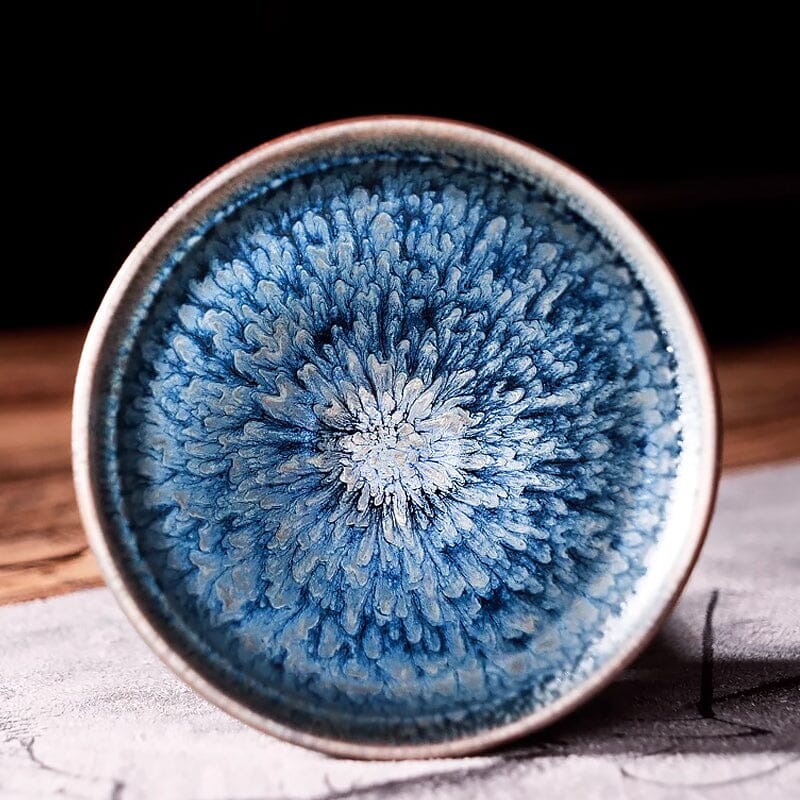
Hare’s Fur Evaluation
A quality Hare’s Fur Jian Zhan usually displays:
-
Clear flowing streaks
-
Natural movement
-
Strong contrast
-
Smooth glaze surface
The best examples show elegant rhythm rather than random lines.
Oil Spot Evaluation
High-quality Oil Spot Jian Zhan is often evaluated by:
-
Crystal clarity
-
Metallic reflection
-
Pattern balance
-
Depth of surface
The crystals should appear naturally developed rather than artificially applied.
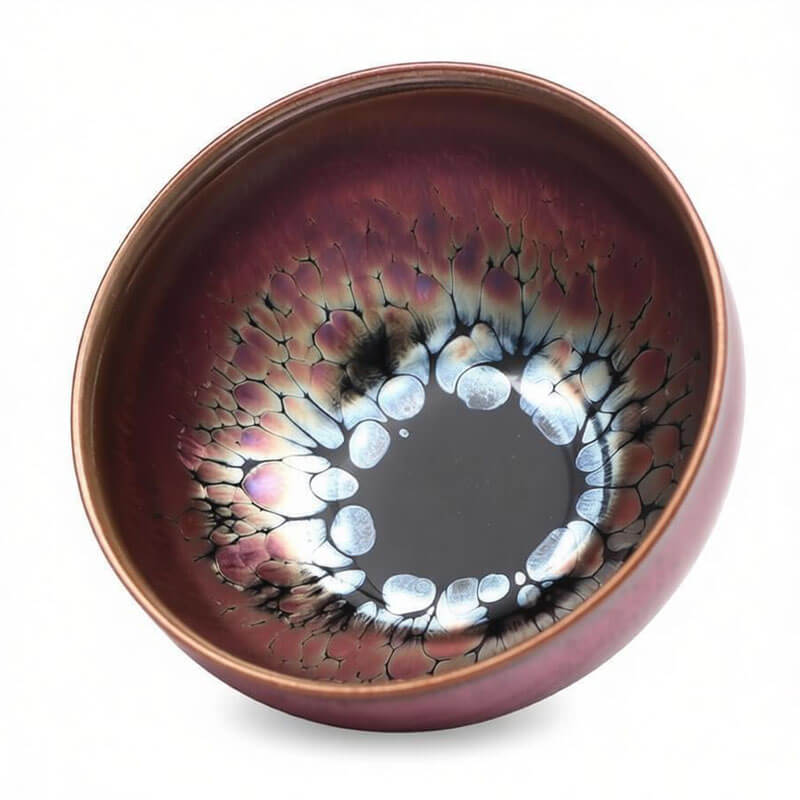
Yohen Evaluation
Yohen is among the most difficult glaze effects to evaluate.
Collectors often look for:
-
Natural color transition
-
Depth of reflection
-
Harmony between colors
-
Authentic kiln transformation
A bowl with bright colors is not automatically a high-quality Yohen.
The overall craftsmanship remains important.
Common Mistakes When Buying Jian Zhan
Mistake 1: Choosing Only by Appearance
A dramatic glaze may attract attention, but craftsmanship matters equally.
Consider:
-
Clay
-
Shape
-
Firing quality
-
Function
Mistake 2: Assuming Higher Price Always Means Better Quality
Price can reflect:
-
Artisan reputation
-
Rarity
-
Production difficulty
However, appreciation should also involve personal connection and actual craftsmanship.
Mistake 3: Confusing Tenmoku Style With Traditional Jian Ware
Many bowls have dark glazes inspired by tenmoku.
However, not every dark-glazed bowl is traditional Jian Zhan.
The complete ceramic process determines authenticity.
Mistake 4: Ignoring the Artisan Story
Traditional ceramics are connected to people.
Understanding:
-
Who made the bowl
-
How it was fired
-
What techniques were used
adds important context.
Buying Jian Zhan Online: What Information Should You Look For?
When purchasing online, trustworthy sellers should provide clear information about:
Materials
-
Clay type
-
Glaze composition
-
Firing method
Craftsmanship
-
Handmade process
-
Artisan background
-
Production details
Product Presentation
-
Multiple photos
-
Clear dimensions
-
Realistic color representation
Usage Information
-
Tea suitability
-
Cleaning instructions
-
Care recommendations
Transparency helps buyers understand the true value of the piece.
Why Authentic Jian Ware Is Worth Appreciating
Authentic Jian Zhan represents the meeting of:
History
A tradition connected to Song Dynasty tea culture.
Science
Complex interactions between minerals and fire.
Craftsmanship
Years of artisan experience.
Individuality
A bowl that cannot be perfectly duplicated.
This combination gives Jian Zhan its lasting appeal.
Key Takeaways
-
Authentic Jian Zhan Tenmoku is defined by materials, craftsmanship, and firing techniques—not appearance alone.
-
Traditional Jian ware uses iron-rich clay and high-iron glaze.
-
Natural kiln patterns have depth and variation that artificial decoration cannot reproduce.
-
Handmade characteristics represent traditional craftsmanship rather than flaws.
-
Buyers should evaluate the entire bowl, including clay, shape, glaze, and artisan process.
-
Understanding authenticity helps collectors appreciate the true value of Jian Zhan.
Frequently Asked Questions About Authentic Jian Zhan
How can I tell if my Jian Zhan is real?
Look at the clay body, glaze depth, firing characteristics, craftsmanship, and production information.
Are all black tea bowls Jian Zhan?
No. Many black-glazed bowls are inspired by Jian Zhan but do not follow traditional Jian ware methods.
Does authentic Jian Zhan always have dramatic patterns?
No. Quality depends on overall craftsmanship, not only visual intensity.
Why are handmade variations valuable?
They show the natural interaction between artisan skill and kiln transformation.
What makes Jian Zhan Tenmoku special?
Its combination of historical tradition, iron-rich materials, unique glaze effects, and handmade character.