Yohen Tenmoku: Why This Rare Jian Zhan Glaze Is Highly Valued
Quick Answer: What Is Yohen Tenmoku?
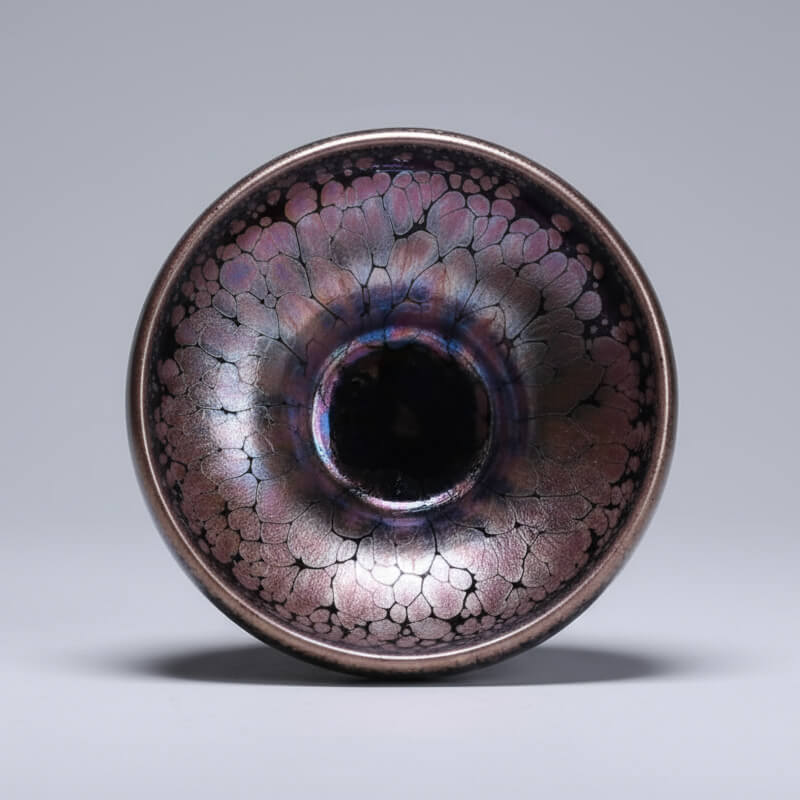
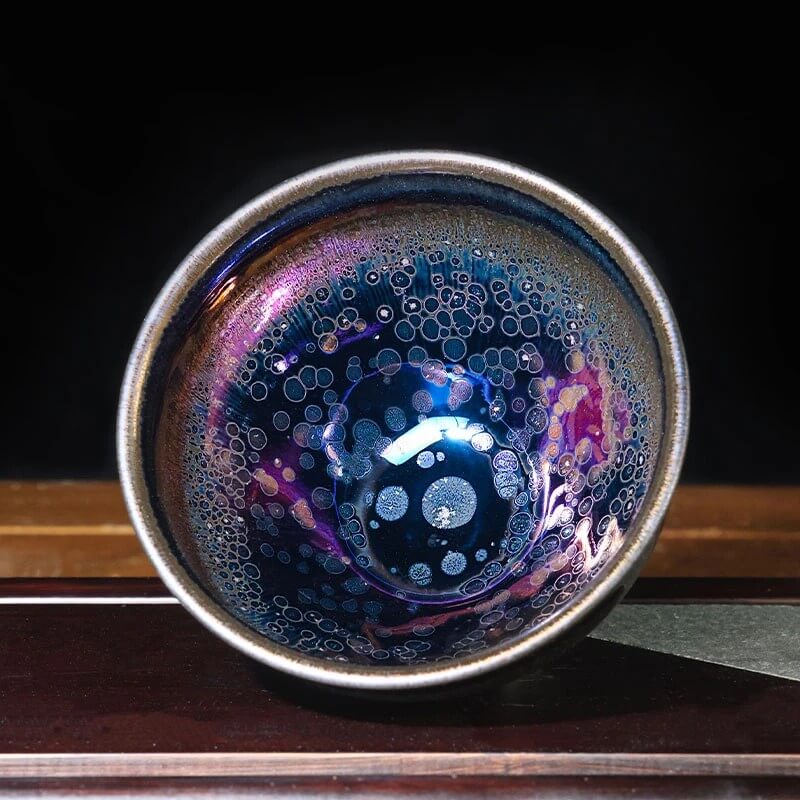
Yohen Tenmoku is one of the rarest and most admired forms of Jian Zhan Tenmoku, known for its unpredictable color transformation and extraordinary kiln effects. Unlike standard glaze patterns, Yohen develops through unique mineral reactions during firing, creating mysterious blue, purple, gold, and iridescent tones that appear to change under different lighting conditions.
The word Yohen (曜変) can be translated as:
"changing brilliance" or "kiln-transformed radiance."
Its beauty comes from a rare combination of:
-
Iron-rich Jian clay
-
Special glaze chemistry
-
Extreme firing conditions
-
Natural crystal formation
-
Unpredictable kiln transformation
Each authentic Yohen Tenmoku bowl is considered a unique expression of earth and fire.
Understanding Yohen Tenmoku
Among all Jian Zhan glaze styles, Yohen Tenmoku occupies a special position.
While styles such as:
-
Hare’s Fur
-
Oil Spot
-
Black Glaze
are admired for their beauty and craftsmanship, Yohen is valued because of its extreme rarity.
The final appearance cannot simply be copied by painting or decoration.
It is created through a complex natural process inside the kiln.
The Historical Connection Between Yohen Tenmoku and Jian Ware
The Peak of Song Dynasty Ceramic Achievement
Jian Zhan reached its artistic peak during the Song Dynasty (960–1279).
During this period:
-
Tea culture flourished
-
Ceramic technology advanced
-
Scholars valued refined simplicity
Jian ware bowls became closely associated with the sophisticated tea culture of the era.
Among these masterpieces, Yohen Tenmoku represented one of the highest achievements of glaze transformation.
Yohen Tenmoku and Japanese Tea Culture
Although Jian Zhan originated in China, the appreciation of Yohen Tenmoku continued strongly in Japan.
During the Song Dynasty, Jian ware tea bowls were introduced to Japan through cultural exchange.
Japanese tea practitioners highly valued these bowls and preserved many examples.
Today, several famous Yohen Tenmoku bowls are regarded as important cultural treasures in Japan.
Their rarity and historical significance have made Yohen one of the most recognized names in the world of tea ceramics.
Why Is Yohen Tenmoku So Rare?
The main reason is simple:
The kiln cannot be fully controlled.
A skilled artisan can prepare:
-
The clay
-
The glaze
-
The firing process
But the final transformation depends on many unpredictable factors.
During firing, small differences can change the outcome:
-
Temperature variation
-
Oxygen environment
-
Cooling speed
-
Mineral movement
-
Bowl position inside the kiln
The artisan creates the conditions.
The kiln creates the final result.
The Science Behind Yohen Tenmoku
The extraordinary appearance of yohen jian zhan comes from complex mineral reactions.
During high-temperature firing:
1. Glaze Melting
The iron-rich glaze becomes liquid.
Minerals begin moving within the glaze layer.
2. Crystal Formation
As the bowl cools:
-
Crystals form
-
Light interacts with mineral structures
-
Colors begin appearing
3. Optical Transformation
The surface may reflect different wavelengths of light, creating colors such as:
-
Blue
-
Purple
-
Gold
-
Silver
-
Green
This creates the famous "changing" appearance of Yohen.
Why Does Yohen Tenmoku Change Color?
One of the most fascinating characteristics of Yohen Tenmoku is that the bowl can appear different depending on:
-
Viewing angle
-
Lighting condition
-
Background color
A bowl may appear:
Under warm light:
-
Gold
-
Bronze
-
Amber
Under natural daylight:
-
Blue
-
Purple
-
Silver
This dynamic quality makes the bowl feel alive.
The Difference Between Yohen Tenmoku and Other Jian Zhan Glazes
Understanding the differences helps explain why Yohen is so valued.
Yohen Tenmoku vs Hare’s Fur Jian Zhan
Hare’s Fur:
-
Fine flowing streaks
-
Traditional appearance
-
More commonly produced
Yohen:
-
Color-changing effects
-
Rare transformation
-
Highly unpredictable
Hare’s Fur represents elegance.
Yohen represents extraordinary transformation.
Yohen Tenmoku vs Oil Spot Jian Zhan
Oil Spot:
-
Round crystal patterns
-
Metallic reflections
-
More recognizable structure
Yohen:
-
Iridescent colors
-
Unpredictable visual effects
-
Greater rarity
Oil Spot shows crystal beauty.
Yohen shows optical transformation.
Characteristics of High-Quality Yohen Tenmoku
Not every colorful dark-glazed bowl is true Yohen.
Quality evaluation requires careful observation.
1. Natural Color Transition
A high-quality yohen tenmoku should show:
-
Smooth color changes
-
Layered reflections
-
Natural optical effects
The colors should appear integrated into the glaze.
2. Depth and Dimension
Exceptional examples often have a sense of depth.
The surface may appear:
-
Layered
-
Three-dimensional
-
Continuously changing
3. Harmony Between Bowl Form and Glaze
The glaze should complement the shape.
A beautiful Yohen bowl balances:
-
Silhouette
-
Surface movement
-
Visual weight
4. Natural Individuality
Because Yohen develops through kiln transformation:
No two bowls are exactly identical.
This uniqueness is part of its appeal.
Why Collectors Value Yohen Tenmoku
Collectors appreciate Yohen because it combines several forms of value.
Historical Value
It connects modern collectors with centuries of tea culture.
Technical Value
Creating successful Yohen requires advanced ceramic knowledge.
Artistic Value
Each bowl represents a unique natural event.
Emotional Value
The unpredictability creates a personal connection between owner and object.
Is Yohen Tenmoku the Most Valuable Jian Zhan?
Yohen Tenmoku is among the most highly valued Jian Zhan styles, but value depends on many factors.
Important considerations include:
-
Authenticity
-
Craftsmanship
-
Glaze quality
-
Historical significance
-
Artisan reputation
A rare glaze alone does not guarantee exceptional quality.
The complete harmony of the bowl determines its value.
Why Yohen Tenmoku Appeals to Modern Tea Lovers
Although Yohen has ancient origins, it fits modern appreciation of:
Unique Objects
People increasingly value items that are not mass-produced.
Natural Beauty
The glaze celebrates imperfection and variation.
Mindful Experiences
Using a special tea bowl encourages slower and more intentional tea moments.
Choosing a Yohen Jian Zhan Bowl
For buyers interested in yohen jian zhan, consider:
1. Observe Under Different Lighting
Because Yohen changes appearance, view the bowl under:
-
Natural daylight
-
Warm indoor light
-
Different angles
2. Examine the Whole Bowl
Look beyond color.
Consider:
-
Shape
-
Balance
-
Craftsmanship
-
Surface quality
3. Understand Authenticity
A professional seller should provide:
-
Clear images
-
Detailed description
-
Production information
-
Honest explanation of glaze characteristics
Caring for Yohen Tenmoku
Despite its artistic value, Yohen Tenmoku is designed to be used.
Care recommendations:
-
Wash gently after tea use
-
Avoid abrasive cleaning materials
-
Store safely
-
Handle with appreciation
The best Jian Zhan is not only displayed.
It becomes part of daily tea practice.
The Philosophy Behind Yohen Tenmoku
The beauty of Yohen reflects an important idea in traditional East Asian aesthetics:
True beauty often appears through the relationship between human effort and natural transformation.
The artisan does not completely control the outcome.
Instead, the artisan creates the conditions for beauty to emerge.
The kiln completes the artwork.
Frequently Asked Questions About Yohen Tenmoku
What does Yohen Tenmoku mean?
Yohen means "changing brilliance," describing the glaze’s unusual transformation and reflective effects.
Why is Yohen Tenmoku rare?
Because its final appearance depends on unpredictable kiln reactions that are difficult to reproduce.
Is every colorful Jian Zhan a Yohen?
No. Authentic Yohen requires specific glaze transformation characteristics.
Is Yohen Tenmoku more expensive than other Jian Zhan?
High-quality Yohen examples can be among the most valuable Jian Zhan because of their rarity and complexity.
Can Yohen Tenmoku be used for tea?
Yes. Like other Jian Zhan bowls, it is designed for tea appreciation.
Final Thoughts: The Mystery of Yohen Tenmoku
Yohen Tenmoku represents one of the greatest expressions of Jian Zhan craftsmanship.
It is a meeting point between:
-
Ancient tea culture
-
Ceramic knowledge
-
Mineral science
-
Natural transformation
Its value does not come only from rarity.
It comes from the fact that every Yohen bowl captures a moment that may never happen again.
The artisan prepares.
The fire transforms.
Nature creates the masterpiece.
That is the timeless attraction of Yohen Tenmoku.