The Science and Craftsmanship Behind Jian Zhan Tenmoku
Chapter 4: The Science and Craftsmanship Behind Jian Zhan Tenmoku — How Clay, Glaze, Fire, and Time Create a Living Work of Art
Quick Answer: How Is Jian Zhan Tenmoku Made?
Jian Zhan Tenmoku is created through a complex combination of iron-rich clay, specially formulated glaze, high-temperature firing, and natural mineral reactions inside the kiln. Unlike painted ceramics, its famous patterns are formed by crystal growth during firing, making every piece of Jian ware naturally unique.
The creation of a traditional Jian Zhan Tenmoku bowl requires the cooperation of human skill and natural forces. Artisans control the clay preparation, shaping, glazing, and firing process, but the final surface patterns are ultimately created by the interaction between minerals, heat, atmosphere, and time.
This balance between craftsmanship and unpredictability is what makes Jian ware one of the most fascinating achievements in ceramic history.
The Foundation of Jian Zhan Tenmoku: Iron-Rich Clay
The first essential element of Jian Zhan Tenmoku is its distinctive clay.
Unlike many ceramic traditions that focus on white porcelain bodies, Jian ware is built upon a dark, iron-rich stoneware clay naturally found in the Jianyang region of Fujian Province.
This clay contains a high concentration of iron oxide and other minerals, which gives Jian Zhan several important characteristics:
-
A deep natural body color
-
Strong interaction with iron-based glaze
-
Excellent heat retention
-
A substantial feeling in the hand
-
The ability to withstand extremely high firing temperatures
The clay is not simply a structural material. It actively participates in the final appearance of the bowl.
During firing, minerals inside the clay react with the glaze above it, creating subtle variations that contribute to the final character of each piece.
The Unique Relationship Between Clay and Glaze
One of the most important concepts in understanding Jian Zhan Tenmoku is that the bowl and glaze are not separate elements.
In many modern ceramics, decoration is applied onto a finished ceramic surface.
Jian ware works differently.
The glaze and clay interact during firing as one integrated system.
The iron-rich body influences:
-
Glaze movement
-
Crystal formation
-
Color depth
-
Surface texture
-
Visual complexity
This relationship is one reason authentic Jian Zhan cannot simply be reproduced by applying a black glaze onto another type of ceramic body.
The magic of Jian Zhan comes from the harmony between earth and fire.
The Science Behind Jian Zhan Glaze
The famous dark appearance of Jian Zhan Tenmoku comes from a specially formulated high-iron glaze.
Traditional Jian Zhan glazes contain significant amounts of iron compounds, which create dramatic transformations during kiln firing.
At normal temperatures, the glaze appears as a simple coating.
However, inside a high-temperature kiln, the glaze becomes a dynamic chemical environment.
During firing:
-
The glaze melts into a liquid state.
-
Iron minerals move within the molten glaze.
-
Temperature changes influence mineral separation.
-
Crystals begin forming beneath the surface.
-
Cooling preserves these patterns.
The final result is a complex surface containing microscopic structures that reflect light in different ways.
This is why Jian Zhan can appear completely different under various lighting conditions.
The Role of Temperature in Jian Ware Production
Temperature control is one of the greatest challenges in creating Jian ware.
Traditional Jian Zhan firing requires extremely high temperatures, often around 1,300°C or above.
At this level, several important processes occur:
Glaze Melting
The glaze becomes fluid and begins flowing naturally across the bowl surface.
Mineral Transformation
Iron compounds change their structure and begin forming crystals.
Pattern Development
The movement of glaze and mineral separation creates the famous visual effects associated with Jian Zhan.
Final Stabilization
During cooling, the glaze surface freezes into its final appearance.
Even small differences in temperature can produce completely different results.
A few degrees of variation may influence:
-
Crystal size
-
Pattern density
-
Color reflection
-
Surface texture
This explains why two Jian Zhan bowls created by the same artisan may never look exactly alike.
Kiln Atmosphere: The Invisible Hand Behind Every Bowl
Temperature alone does not determine the final result.
The atmosphere inside the kiln is equally important.
The amount of oxygen available during firing affects how minerals react.
Two major firing environments are:
Oxidation Firing
An oxygen-rich environment can produce different glaze characteristics and color effects.
Reduction Firing
A limited oxygen environment changes how iron compounds behave, often creating deeper colors and more complex crystal development.
Traditional Jian Zhan relies heavily on careful control of firing atmosphere.
The artisan must understand how:
-
Flame movement
-
Oxygen levels
-
Kiln position
-
Heating speed
-
Cooling process
influence the final result.
This knowledge is built through years of experience.
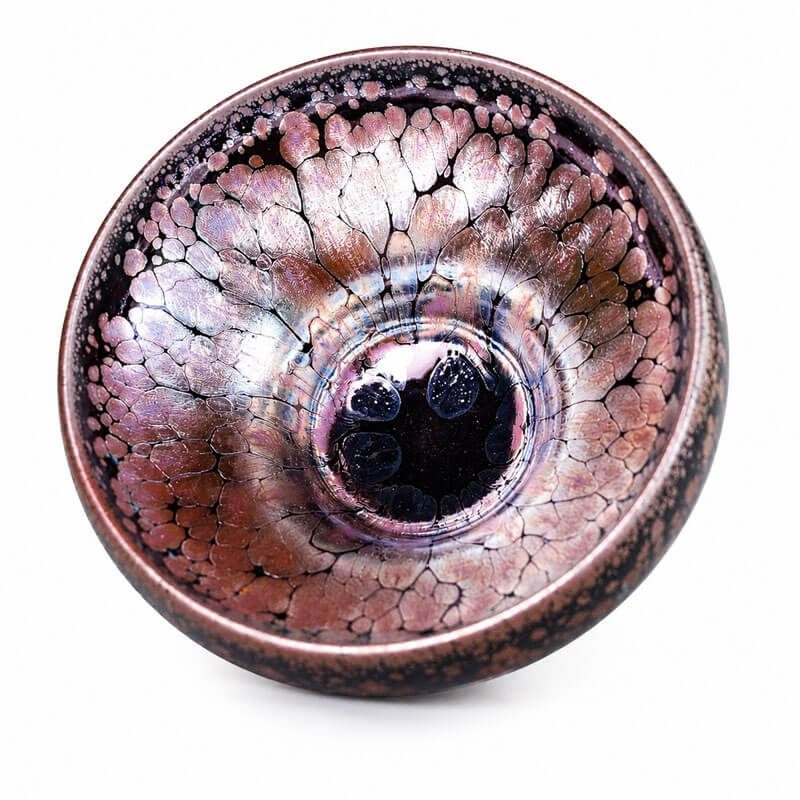
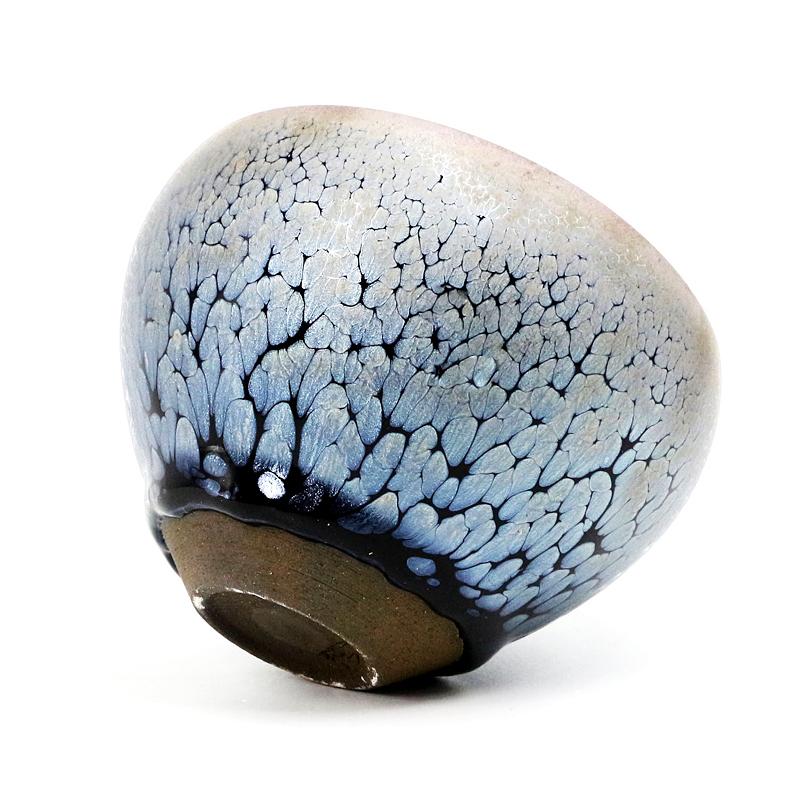
How Hare’s Fur, Oil Spot, and Yohen Effects Are Created
The beauty of Jian Zhan comes from its natural glaze patterns.
Hare’s Fur
Hare’s Fur is one of the most recognizable Jian Zhan Tenmoku styles.
During firing, iron-rich glaze flows downward, forming thin streaks across the surface.
These lines resemble the soft texture of hare fur.
High-quality Hare’s Fur bowls often display:
-
Long flowing lines
-
Strong contrast
-
Smooth glaze texture
-
Balanced pattern distribution
Oil Spot
Oil Spot patterns develop when iron crystals separate and gather into small circular formations.
The surface resembles tiny droplets of oil floating on water.
The quality of Oil Spot Jian Zhan depends on:
-
Crystal size
-
Distribution
-
Metallic reflection
-
Depth of glaze
Exceptional examples may show silver, gold, or rainbow-like highlights.
Yohen
Yohen represents one of the most mysterious Jian Zhan effects.
The term refers to unexpected kiln transformation.
Yohen bowls may display:
-
Blue reflections
-
Purple tones
-
Metallic colors
-
Rainbow effects
Because Yohen depends heavily on rare firing conditions, it has historically been considered one of the most precious Jian Zhan styles.
The Handmade Process: From Clay to Finished Bowl
Creating Jian Zhan involves many carefully controlled stages.
Step 1: Clay Preparation
The artisan selects and prepares suitable iron-rich clay.
The clay must be processed carefully to achieve the correct balance of:
-
Strength
-
Texture
-
Mineral content
Step 2: Shaping
Traditional Jian Zhan is often shaped by hand on a pottery wheel.
The artisan carefully controls:
-
Bowl thickness
-
Curve
-
Foot design
-
Overall balance
The simple appearance of Jian Zhan requires great skill because small imperfections become visible after firing.
Step 3: Drying
Before firing, the shaped bowl must dry slowly.
Uneven drying can cause:
-
Cracks
-
Warping
-
Structural weakness
Step 4: Glazing
The bowl is coated with iron-rich glaze.
The thickness and placement of glaze influence the final pattern.
Too much glaze may cause defects.
Too little glaze may prevent proper crystal formation.
Step 5: Kiln Firing
The bowl enters the kiln and begins its transformation.
At this stage:
-
The artisan loses direct control.
-
Minerals react naturally.
-
The final appearance is created.
This moment represents the unique philosophy of Jian Zhan:
Human effort prepares the conditions, but nature creates the final artwork.
Why Every Jian Zhan Is Unique
One of the greatest attractions of Jian Zhan Tenmoku is individuality.
No two handmade bowls are exactly identical because countless variables influence the final result:
-
Clay composition
-
Glaze thickness
-
Kiln position
-
Temperature changes
-
Flame movement
-
Cooling speed
This means each Jian ware piece carries its own history.
A small variation is not considered a defect—it is evidence of authentic craftsmanship.
Jian Zhan as the Perfect Balance Between Science and Art
Jian Zhan represents a rare combination of:
Ceramic Science
Understanding minerals, chemistry, temperature, and kiln reactions.
Traditional Craftsmanship
Years of experience shaping clay and controlling firing conditions.
Artistic Expression
Accepting natural variation and celebrating uniqueness.
Unlike industrial products designed for perfect repetition, Jian Zhan values individuality.
Its beauty comes from the relationship between human intention and natural transformation.
Key Takeaways
-
Jian Zhan Tenmoku is created through the interaction of iron-rich clay, glaze chemistry, and high-temperature firing.
-
Jian ware patterns are naturally formed inside the kiln rather than painted onto the surface.
-
Temperature and kiln atmosphere play essential roles in developing glaze effects.
-
Famous styles such as Hare’s Fur, Oil Spot, and Yohen are created through mineral crystallization.
-
Every handmade Jian Zhan is unique because the kiln creates natural variations.
-
The beauty of Jian Zhan comes from the balance between human craftsmanship and the unpredictable power of nature.
Frequently Asked Questions About Jian Zhan Craftsmanship
Why is Jian Zhan black?
The dark color comes from iron-rich clay and iron-based glaze that transform during high-temperature firing.
Are Jian Zhan patterns painted?
No. Traditional Jian Zhan patterns are created naturally through mineral reactions inside the kiln.
Why is every Jian Zhan different?
Because natural firing conditions create unique crystal formations and surface patterns.
What temperature is Jian Zhan fired at?
Traditional Jian Zhan is fired at very high temperatures, often around 1,300°C or higher.
What makes Jian ware valuable?
Its historical importance, handmade craftsmanship, rare glaze effects, and unique kiln results contribute to its value.